I open my eyes with the distinct awareness of my 5:30 a.m. alarm sounding off on my cell phone. As I groan and roll over to hit the snooze button, I notice the sound of light rain bouncing off my tin roof. Most people would choose to do what’s easy: continue to hit the snooze button, and settle back in for a few more hours of sleep. This is a mistake.
Deer Movement During Light Rain
During periods of moderate to light rainfall, deer continue to do what deer do. Some biologists even suggest that slight precipitation can increase deer movement. After all, they spend their entire lives outside, no matter the weather. You can have a serious leg up on most other deer hunters just by getting out of the bed on a rainy day.
The worst part of hunting during inclement weather is the discomfort, but sometimes the discomfort pays off. I’ve braved the elements and have been rewarded with empty parking lots at some of my favorite public-land spots and numerous deer sightings on several occasions.
Advantages of Hunting in the Rain
The biggest advantage I’ve found from hunting during the rain is when slip-, or still-hunting. The wet understory can dampen the sound of footsteps, allowing you to get closer to your quarry. Spending the day sitting in your stand on a hot feed-tree or on a nice travel route can be equally effective, especially during the rut. It seems deer can be less weary and almost carefree during times of light precipitation. When it’s dry and clear outside, I get busted by the slightest wrong move; when it’s wet and soggy, I seem to get away with a few more mistakes.
Things to Consider when Hunting in the Rain
Taking the shot is an important consideration when deer hunting in the rain. Our human senses are like everything else around you–dampened. Visually tracking blood can become a real challenge when everything is wet, and even if the deer goes a short distance, you usually can’t hear where or when they crash due to the background noise. Thankfully, a canine’s sense of smell is improved by all the moisture in the air; for this reason I highly recommend keeping a friend with a good tracking dog on speed dial if you plan on capitalizing on the opportunity.
There have been times when I have chosen to sit during a torrential downpour. This past season, I sat from about noon until dark, clutching my tree during one of these periods in the middle of Arkansas’ rut without seeing a single creature. I do not recommend such miserable adventures. Other times I have sat in a stand and seen deer after deer pour into a green field while the rain fell. I will gladly hunt a heavy rainfall if the weatherman is calling for the rain to subside, especially just before dawn or dusk. These times can be a magical first or last few minutes of the day that most people will miss because they refuse to brave the weather.
Hunting in the rain can be worth it–and it also can be miserable. Don’t forget that some of the same things that benefit you also benefit the deer. Your footsteps are silent, and so are theirs. Deer have better olfactory senses than a dog, so they can smell you better in the rain than when it’s dry. The same constant movement from drips of water and wind that can make it hard for a deer to notice your movement also disguises theirs.
Use common sense, look at the radar, and make your decision, and most of all be safe. If you think you’re up to the challenge, grab a raincoat and take your soaking. It just might pay off.
Vance Collins
Vance is a husband, father, and a full-time fireman. He grew up in the North Georgia mountains and has always had the privilege of enjoying hundreds of thousands of acres of public land to explore. His ancestors have inhabited the southern highlands of North Georgia and Western North Carolina since the late 1700’s. He hunts, fishes, and recreates year round in the wild places we have been tasked to preserve. He hopes to have a part in making sure that future generations get the same experience and opportunities that he has had. He believes that without wild places we lose a part of our very existence and that these precious places make us who we are.
Located in downtown Billings, Montana, Walker’s Grill enjoys a reputation as one of the best restaurants in the area. It may not deserve Michelin stars, but this is eastern Montana meat-and-potatoes country. Whenever we overnight in Billings to catch a plane, we usually treat ourselves to dinner at Walker’s.
Like most good restaurants, the menu there is a mix of old standbys and new recipes getting a test drive. We have long been intrigued by one of those regulars that seems to have been there forever: James Beard’s meatloaf. We always swear we’re going to try it but never do. Granted, Beard was once one of the country’s most famous chefs and a pioneer of television cooking shows, but meatloaf? Our expectation for a restaurant meal is something we couldn’t throw together just as easily (and more cheaply) at home, either because of the quality of the ingredients or a unique presentation. Anybody can make meatloaf out of anything, right?
GROUND VENISON MEATLOAF IS DIFFERENT AND UTILIZES CUTS THAT CAN’T BE COOKED STAND-ALONE
Well, yeah … and that’s one of the wonderful things about meatloaf. It’s a basic concept that can be modified in many ways depending upon availability of different ingredients and individual tastes. It fares particularly well using ground venison as a starting point and creating different variations from there. As discussed earlier, we recognize that you can’t make a stand-alone meal out of every cut from a venison carcass. But with proper handling, a deer can yield excellent ground meat (burger) that can be made into almost anything, including meatloaf.
Most of us ate plenty of meatloaf when we were growing up. Ingredients were inexpensive and readily obtained; preparation was quick and easy—perfect for a busy household with hungry kids. While every family seemed to have its own favorite recipe, most meatloaf tasted pretty much the same and quickly became boring. What kid has never said, “Oh, no! Not meatloaf again.”
We can do better, and using ground venison instead of the traditional beef burger is a good place to start. Unfortunately, meatloaf made with lean meat tends to come out dry and crumbly, so we recommend supplementing the venison with ground pork in a 2:1 ratio. Using the seasoned sausage of your choice will allow even greater variety in the finished product. It would be hard for most of us to imagine meatloaf without ketchup, but commercial ketchup suffers from the same problem as most meatloaf: It all tastes nearly the same and quickly becomes boring. We prefer the zippier version described below as a change of pace.
It’ll have you saying, “Oh, boy! Meatloaf!”
RECIPE – Not Your Mother’s Venison Meatloaf
Ingredients (serves 6)
2 lbs ground venison
1 lb pork sausage
1 large onion, finely diced
1 celery stalk, finely diced
2 carrots, shredded
4 garlic cloves, chopped
1 tsp rosemary
Dash ground nutmeg
Salt and black pepper to taste
1 tsp capers, minced
2 tbsp soy sauce
Chili garlic sauce to taste (1-2 tbsp)
3 eggs, lightly beaten
1 cup fresh breadcrumbs
½ cup milk
1 tbsp vegetable oil
6 bacon slices
Directions
Heat oil in a large skillet over medium heat and add the celery, onion, grated carrots, and ½ tsp sea salt. Sauté until softened, about 5 minutes. Add minced garlic and cook for about a minute more. Remove from heat and let cool for several minutes.
Add the milk to breadcrumbs and let soak.
Add the sauteed vegetables, ground venison, ground pork, eggs, chili garlic sauce, spices, and soy sauce to a large mixing bowl.
Mix to combine. At this point, take a tablespoon of the mixture and cook thoroughly on a hot skillet. Let it cool and have a taste, adjusting seasonings to your preference.
Place the mixture on a greased baking pan. Mold into a loaf by hand.
Criss-cross bacon strips across top of loaf. You may add some ketchup on the top.
Bake at 350 degrees F for 60 minutes or until internal temperature reaches 160 F. Baking time may vary depending on how you shape the loaf.
RECIPE – Not Your Mother’s Chipotle Ketchup
(May be made up to two months in advance.)
Ingredients
2 bay leaves
1 tsp black peppercorns
1 tsp mustard seeds
3 whole cloves
1 small cinnamon stick
¼ tsp allspice
1 tbsp vegetable oil
1 medium onion, chopped
1 6 oz can tomato paste
3 minced garlic cloves
2 tbsp minced canned chipotle in adobo sauce
3 pounds fresh tomatoes, cored and chopped. May substitute 3 cans of diced tomatoes, drained.
¾ cup cider vinegar
1/3 cup brown sugar
Salt to taste
Directions
Place the first six ingredients in cheesecloth and tie closed with twine. Cut back on cloves if you prefer less of that distinctive taste.
Heat oil in a Dutch oven and cook onion 5 minutes or until soft. Add tomato paste and garlic, mix well, and cook for another 2 minutes.
Place mixture from No. 2 above, chipotle, and half of tomatoes in a blender and puree until smooth, about 1 minute. Transfer to bowl, process remaining tomatoes, and combine.
In small batches, pass mixture through a fine strainer into a new bowl. Remove pulp and discard.
Add vinegar, sugar, salt, and spice sachet, bring to slow boil over medium heat, and stir until mixture thickens and darkens, approximately 30 minutes to an hour.
As mixture cools, funnel into 1-cup jars. Seal with lids and place in refrigerator, where ketchup will keep for up to two months.
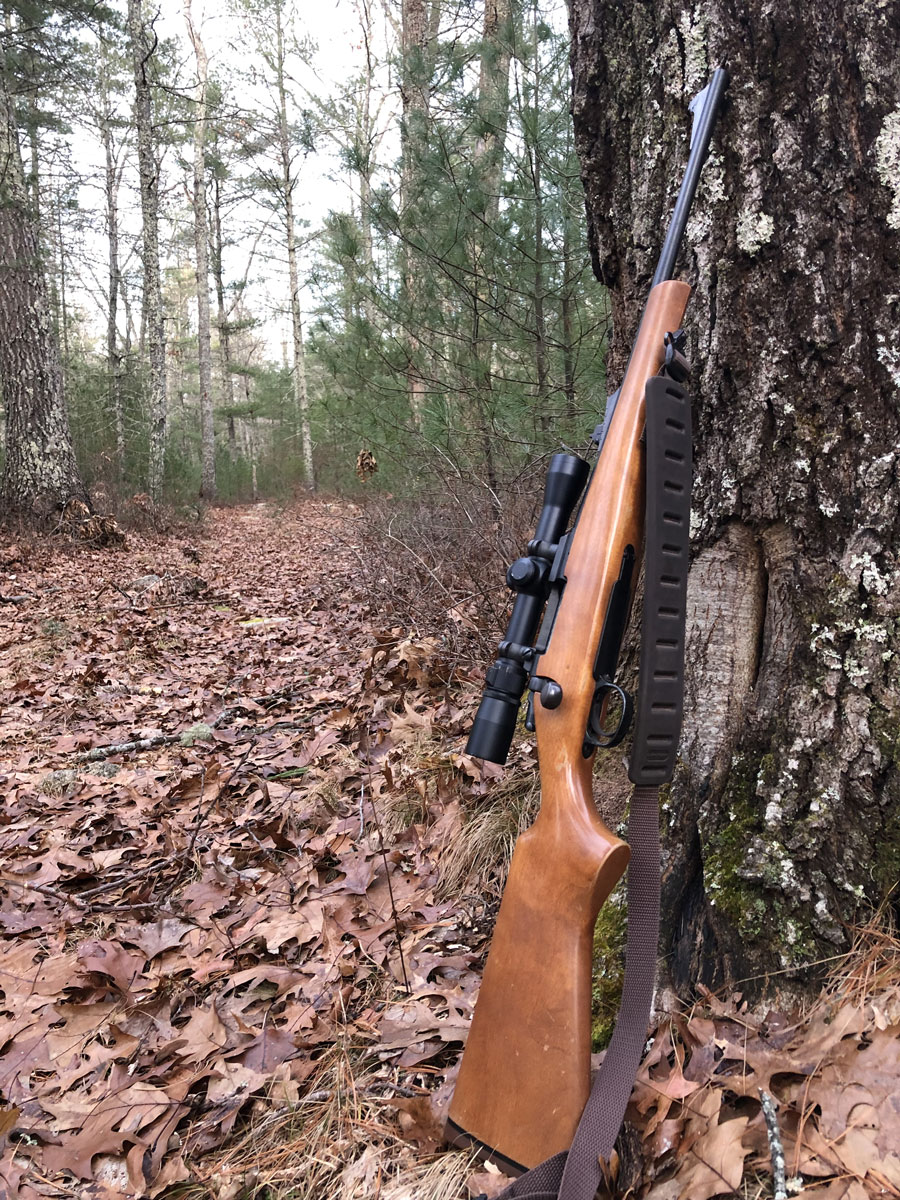
My breath wasn’t slowing down any time soon. Not after the 230-yard fast-walk/slow-run I’d just woven around the pecan trees that bordered the field edge, and certainly not with ears and eyes and antlers staring back at me as I steadied myself and my rifle against the hard bark of the tree. But I knew my sequence, I knew the rifle, and I knew that the .260 round would hit where I held the crosshairs. The Remington Model 7 that sat tucked into the crook of my shoulder and welded to my cheek that morning came a long way to be on that Texas pecan farm; considering I hated that rifle for a very long time, I can tell you that I came a long way, too. Time, experience, and contentment can do that for both things and people.
I’ve sat in deer stands for as far back as I can remember, since the age of five or maybe six years old, in wooden platform stands made by the hands of my father and his father together, even the one on Reynolds’ land with a long walkway that had its own railing along a rotund oak limb. I tagged along with a BB gun and battery-heated socks with hopes of staying warm long enough not to interrupt my dad’s sit. It rarely worked; more often than not, I sat with my feet in his coat for warmth to round out our time in the woods. But I was there with them, my idols, and I didn’t want to be anywhere else.
Frank, my grandfather, ran a World War II-era .30-06 semi-automatic, a 13-pound behemoth that he wielded with the same precision that a surgeon affords a scalpel. I could barely shoulder it at the time. The tool of choice for my dad, a carpenter by trade and ever practical, was a Marlin 30-30 lever action that used the same maneuver to chamber a round and cock the hammer as what pumped up the BB gun I carried. Mine was simply carried in homage to the real thing that he carried in his massive palms whenever on stand. Their guns were no different from any of their other tools, handled with the same fluidity with which they swung framing hammers and penciled lines with a carpenter’s square.
I idolized them, and their tools of the trade, too. I wanted my own gun to be an extension of me, just as theirs were to them. I wanted their stories and their red-and-black-checked Woolrich and their L.L. Bean boots. I wanted to be one of them, and as it is with youth, I wanted it now.
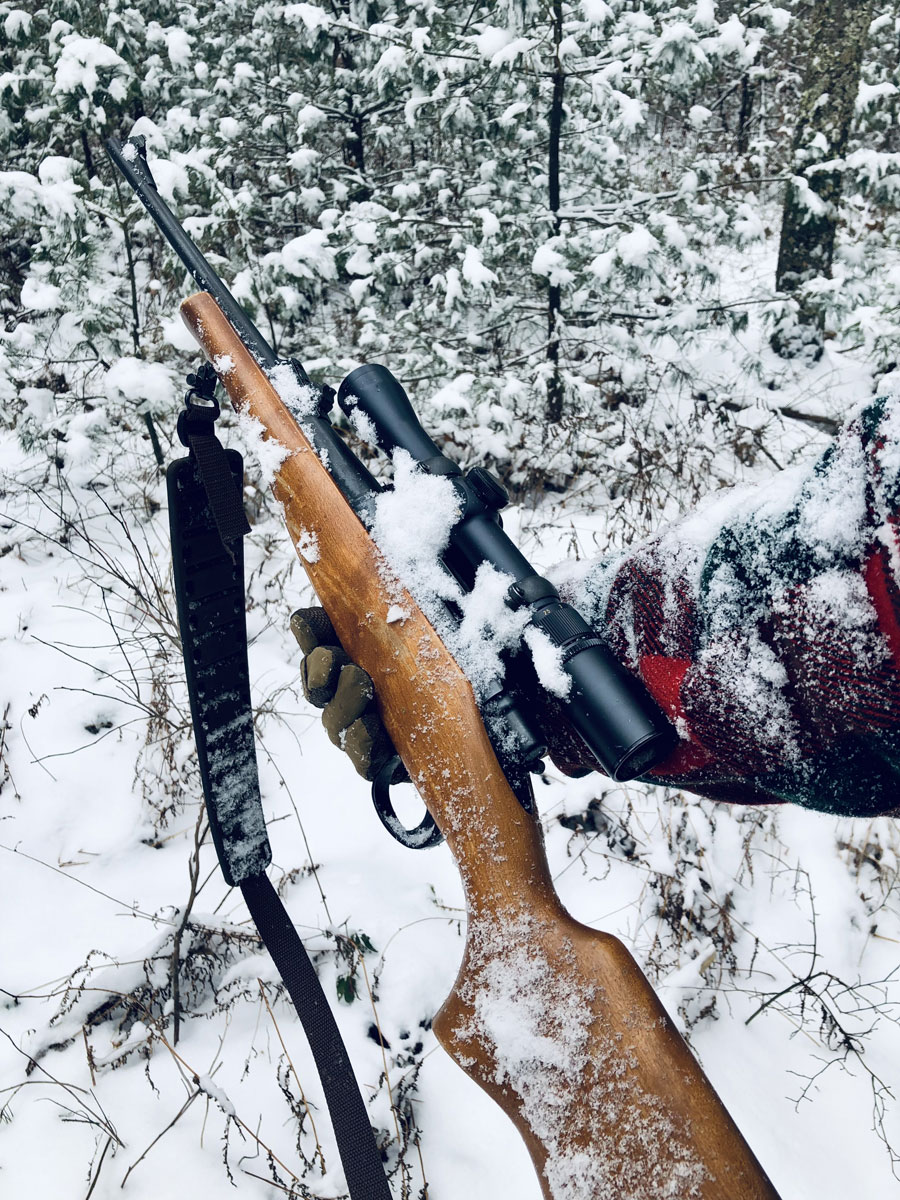
Instead, on my 12th birthday I opened a box containing something completely off my young radar, something not even in consideration for a New England kid’s first deer rifle: the Model 7 chambered in .260. Through the wrapping paper and under the box top there lay a short-barreled, short action, bolt rifle with an orange-yellow wood stock and orange rubber butt pad. I’m sure I had that face at the time—you know the one—where you’re trying to convey appreciation and also figure out what in tarnation is in your lap. I know I had it because Frank launched into an explanation of how this round is great for young kids and shoots super flat for very long shots and could be restocked when I got older to fit me as I grew. I smiled, but I wasn’t buying it.
Dad zeroed it in and I shot it a few times before the next season opener. I was proficient enough, hitting the paper plate that we nailed to a tree across the farm pond and thus passing the test to take the rifle into the woods for the upcoming opener. It seems ridiculous now, the paper-plate test, but those were the times and they were my idols. I wasn’t exactly clamoring to practice shooting it more, nor did I know that I should. The paper-plate test left me nowhere near proficient, not even close.
Not only that, but the bolt gave me fits every time I racked it. The action had a tendency of getting stuck open as I fiddled to get the bolt moving forward and locked. I had a terrible time getting the eye relief right on the scope, too; I was constantly moving it forward and backwards to find the right sight picture. And the kick! I grew up around beef cattle and would have rather our herd bull walloped me in the chest than shoot more rounds at paper plates through that gun. But the gun was mine and I was going hunting and hunters persevered, at least according to all the stories I heard. And so I did.
The first deer that I shot with it survived the encounter. It was my first opening day and I sat nestled up against the base of one of the three big white pines at the lower end of what would become known as “Mike’s field” on our new family farm. Like clockwork, two does came from the opening of the back field into the hardwoods. They were alarmed and moving, but not running. They were feeling the pressure from Frank’s post-morning sit/saunter along the steep rock face that marked the southern boundary of the farm, where he hoped to do as he just did: bump a couple of deer my way.
I’ll spare you the details, but the short of it is that a 12 year old, nerves, deer, and opening day don’t mix well. The bullet skimmed hair, skin, and a bit of fat off the stomach, and she ran with a scar thereafter, showing up on the trail camera that my dad bought off eBay later that season.
I killed a deer—a nice one, too—with that rifle two weeks later, but the die was already cast. The rifle wasn’t what they carried and I never gave it a fair shake. The Model 7 seemed clunky, new, and out of place in the quaint, sleepy hollow-esque New England woods that surrounded deer season—a piece of modernity amidst an antiquated backdrop. I carried it for a few more seasons, pulled the trigger a few more times, but nothing to show for it. I was convinced that it was the rifle, being too young and cocksure to know the rifle had nothing to do with it.
Frank died when I was 16 and Dad stopped hunting for a long while after that. I couldn’t touch Frank’s rifle, a physical and mental weight I’ve yet to carry to this day, but Dad’s rifle became fair game. He may have taken a break from the woods, but his gun never did. For almost 15 years it was the one I took to the woods, morning and afternoon, season in and season out; the Model 7 sat in the corner of my bedroom, just to the side of my dresser with its bolt slid open and collecting dust.
Time went on. I settled elsewhere, and traveling home to hunt the farm happened less and less until it happened not at all. I chased deer on other farms in other states with others’ guns. Eventually one Christmas, I asked for a hard case to take a rifle with me.
Maybe it was the guilt of not coming home for deer season, or moving half a country away and only seeing Dad a few days a year, but I left his .30-30 where it stood in the basement safe and packed up the Model 7 for new horizons.
It was different now, no longer new and shiny; the stock was a bit dull and the finish wearing in a few spots from neglect. Age tints perspective like the polarization on a pair of sunglasses—it’s impossible to notice the added layer, but the view is unmistakably different when the years are added on. In the years after Frank’s passing, I clung to anything with a tie to him. No longer the kid in oversized camo, I wore dark green wool pants and his buffalo plaid shirt into the woods with the necessary orange vest over the top. I wore his neck gaiter and lined deerskin gloves and even drove his pickup.
He didn’t give me much when he was around—most of the gifts from him were tokens chosen by my mother with his name written on the tag, but he gave me that rifle and it seemed a shame to let it sit in that corner any longer.
But I still didn’t trust it. Old feelings are hard to extract, like cockleburs and burdocks and stick-tights enmeshed in wool; it takes time, patience, and experience. A helping hand doesn’t hurt, either.
I hunted with other rifles in the years since I brought the Model 7 west with me to Wisconsin. I shot it at the occasional target, and like I was 12 again, I generally hit what I aimed at, even closer to the bullseye and grouped tighter, too. But still, every time I slid its slender frame out of the case, I gave it the once over and wondered: Are you going to let me down again this time?
I often thought about modifications during those first few years back together. A new scope, a new stock, a new trigger maybe—I still focused on the rifle and all the ways that I believed it slighted me.
My first hunt of 2020 came in September as a mentor for the first Hunt to Eat Camp, an immersive hunting experience for new hunters to expand their level of comfort in all aspects of hunting. I’ve always had an eye for sentiment, so if I were to hunt alongside an up-and-coming hunter, the Model 7 would be there with me.
Part of the camp curriculum includes range time with detailed instruction, something any hunter would do well to embrace. After the students all took their turns, some of the mentors took the opportunity to check their zeros after travel. I did, too. I settled the rifle into the rest, removing all influence but the pad of my finger on the cold metal of the trigger. My nerves ran rampant like never before in 30 years of firearms use. How could I be a mentor and be this nervous to shoot this rifle?
But no one was paying attention to what I was doing. They were all engrossed in conversation about the afternoon hunt and the endless what-ifs that come with new experience. No one cared about me or the gun or the target downrange. The pressure wasn’t there anymore, so the only thing left was to align the crosshairs on the target and squeeze the trigger. Two shots, two matching holes just outside of the bullseye. Unbeknownst to the crowd, relief crashed through me like a wave as I looked through my binoculars at the target. There was nothing wrong with the rifle, the scope, or the trigger. The “something off” was me.
The next morning, I watched the sun come up over a field of sunhemp nestled amongst young plantation pines, a perfect food source tucked in a host of cozy bedding options. My mentee had taken a mature doe the night before and was sleeping off the high. I sat in the box blind alone, eyes cruising the field edges while the world woke up. The interruption came after the shots of other hunters and the group text lit up. Congratulations sent, I felt something ahead of me and my eyes snapped to the path in the middle of the field: deer. A doe—fair game, as that’s what the landowner wanted us to take.
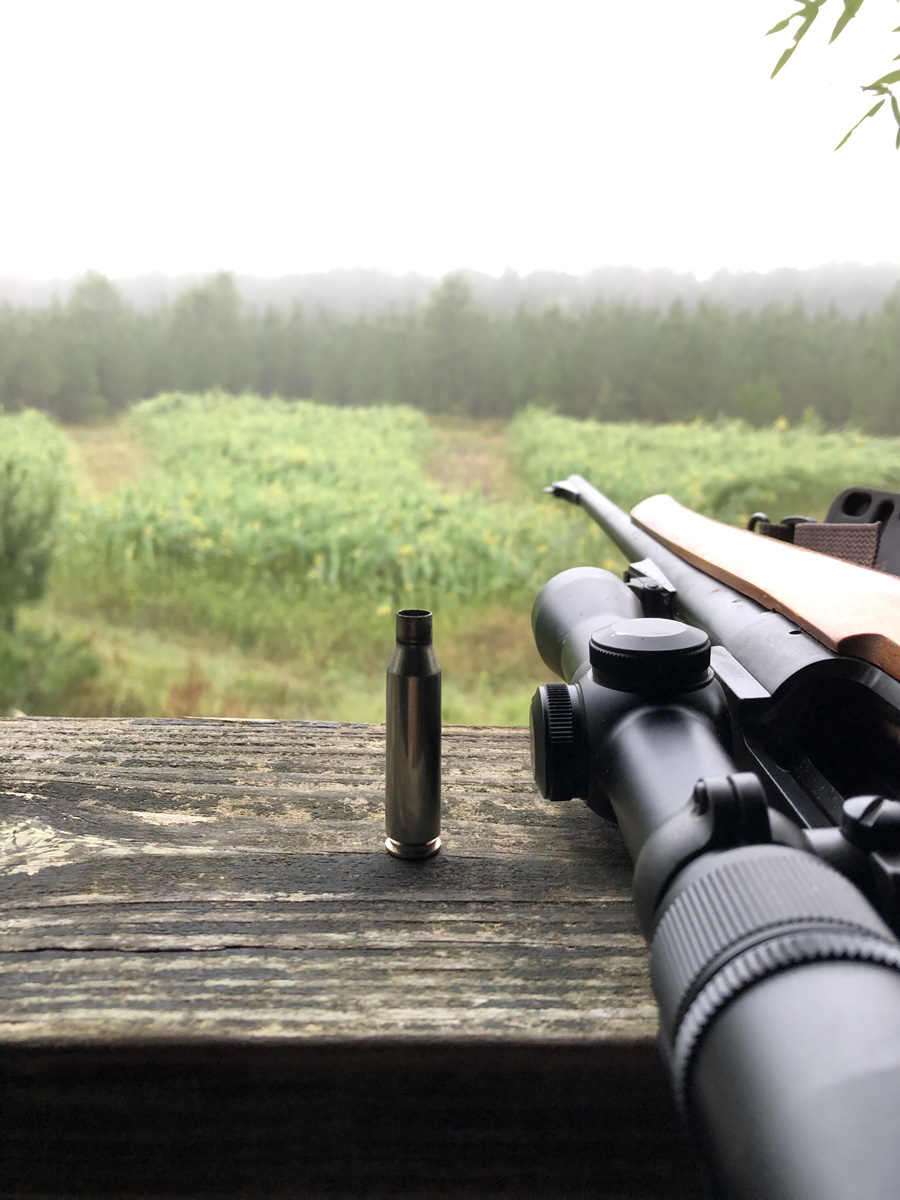
The crosshairs came to rest on the interior edge of her shoulder as my elbow steadied on the blind’s window ledge. Inhale. Start to exhale. Squeeze on the trigger, know your shot before you take it, Mike. Recoil punched into my shoulder as she lurched from the impact right on target. I slid the empty cartridge out of the chamber and thumbed it in my hand. I keep empty shells from important moments as talismans of lessons learned, and this one would join them as a memento of self-doubt exorcised.
I wasn’t ready for that gun as a kid. I wasn’t ready for the weight of expectation that came with the litany of hunters before me in my family—to be clear, expectations that came from nowhere and no one but myself. I could blame Dad or Frank for my failure, for not teaching me the right way or taking enough time with me, but that wouldn’t be fair to them. They never asked me to want to be like them. They just wanted another hunting buddy, another person in the truck to laugh at jokes and ask questions and hear their stories. They wanted someone to help drag after things came together and someone to share their solemnity in the rare times they fell apart.
It’s tough to have patience, to let the skill and comfort grow over time through perseverance and education. It’s harder when the expectation weighs heavy on the outset, as though the outcome should come now instead of in due time. Some things require seasoning, hunters and deer rifles included.
Twenty years later, I have nothing to prove in the deer stand, not to me, to Frank or Dad, or to my hunting partners. This is a perspective that only time and patience could give me. Persistence. Showing up and doing the work and leaning in when it’s hard. All I wanted as that little kid was to be good enough to be on par with the legends that my dad and Frank shared while I sat in the backseat of the pickup on post-hunt drives. I wanted to skip the hard parts; I wanted to skip the learning and the growing and get right to it. There’s something to be said for letting things marinate, for letting them develop and grow and blossom organically. Trying to run at the speed of a rifle round isn’t going to cut it, for things are missed along the way.
Hunting is hard enough. The pressure mounts the moment you leave the parking spot and begin the story of the day, a story that crescendos when the exclamation point of a rifle shot is slammed on the page. It’s a steep ramp; Frank knew that, and my Model 7 was his attempt at lowering the slope, but I was too proud to let him help.
I killed that buck in Texas without one shred of doubt in my mind while my buddy Willie looked over my shoulder. We shared a blind and stories and memories for two days before the moment arrived to go after the wide 8-point in the wheat field below us. The night before, we sat surrounded by deer and watched the sun set until it was so dark that we couldn’t see each other. In pitch black, I told him it had been 18 years since Frank passed and 22 since I killed that first deer with the Model 7 leaning in the corner.
It’s no longer shiny, new, and out of place. I no longer doubt the rifle, just like I no longer doubt myself. I grew up listening to the stories of legends, stories I never thought I could tell on my own.
But here I sit, staring at the calendar as another deer season looms, cleaning a rifle I never wanted, a rifle I didn’t know I needed. And now, it’s the only story I want to tell.
The view from hog country, through the lenses of thermal scopes and the dismal science
A good shoot-‘em-up hog hunt is the death of a lot of things, including Adam Smith’s enduring notions of market equity, fair distribution of resources, and restrained behavior.
Had Smith, the father of free-market economics, encountered “pasture roaches,” as feral hogs are called by the West Texas swine-eradication squads, he might have modified his famous conclusion that the “invisible hand” of capitalism guides market behavior.
Political economy, it must be noted at the get-go, is the farthest thing on the mind of Gage Porter, who’s spending the summer before his last season as quarterback of Southern Nazarene University’s Crimson Storm guiding pig hunters across the winter wheat belt west of Wichita Falls. He’s never heard of Adam Smith and couldn’t care less whether Milton Friedman or John Maynard Keynes or any other economic luminary was in the back seat of his battered Yukon, chugging 24-ounce energy drinks and fingering a rifle. Porter is out to kill pigs—“make a pile,” as he puts it—and as long as you don’t shoot a cow or a companion, it’s all the same to him whether you kill one or two dozen. You’ve paid for the night, and now you’re in it.
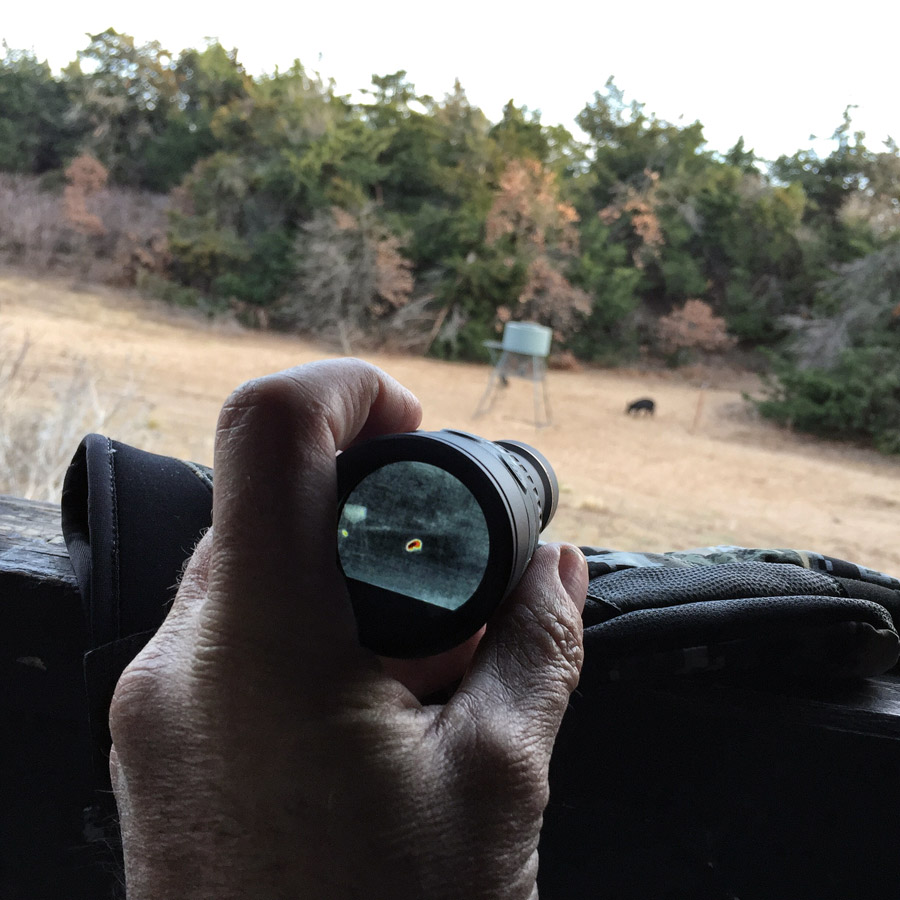
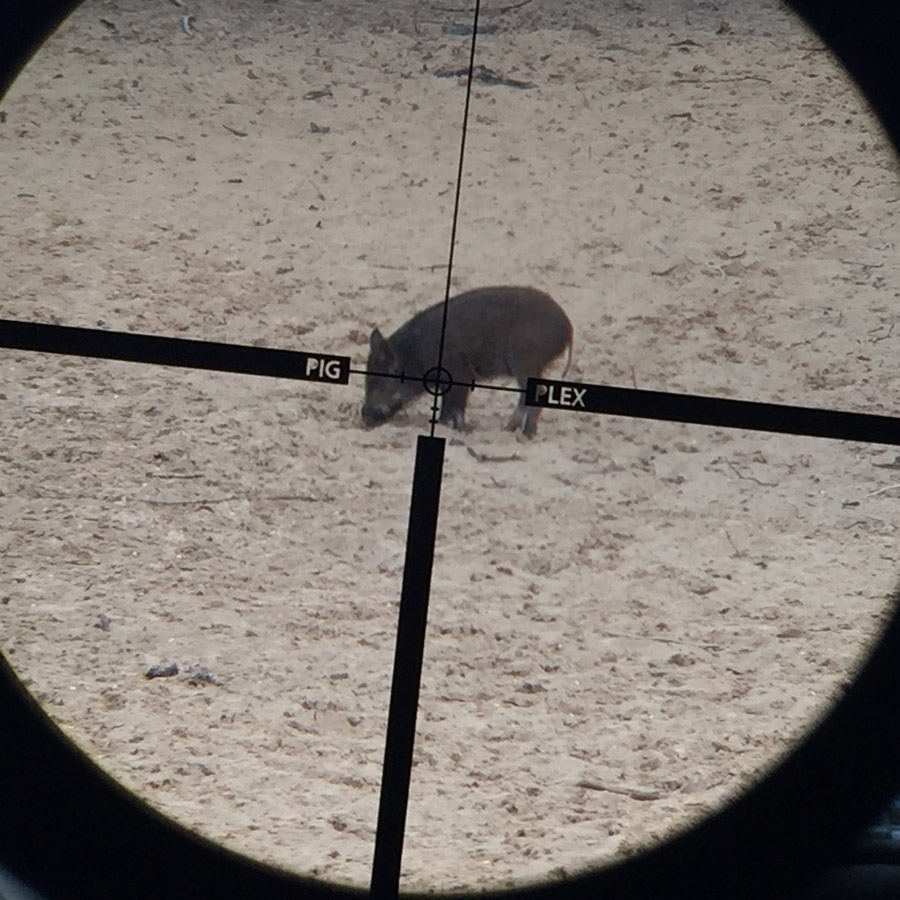
This is Porter’s element, watching a sounder of wild pigs feed into the field of view of our thermal scopes, signal-calling the coming mag-dump melee in a stage whisper. And, truth be told, societal standards don’t matter much when you’re behind a suppressed AK in a harvested wheat field at an indecent hour of the night. In this moment, only a few things snap into focus: your shooting lane, the sizzling luminescent reticle of your thermal scope that looks uncomfortably like a cross burning in a lawn, and the biggest hog of the bunch.
Briefly back to Adam Smith, that celebrated philosopher of eighteenth-century England, whose contribution to economics is his thesis that unfettered markets are normalized because supply always rises to meet demand, which in turn picks and chooses market winners based on price, quality, and availability. I’ve tested this theory a half-dozen times with feral hogs, and it’s as incorrect in Oklahoma and North Texas as it is in Florida and coastal California. It’s wrong because hogs represent what Smith might have called an immoral market, influenced by factors that are neither consistent nor transparent. While demand is fairly linear, predictably determined by those hunters who have available time and money, the market is perverted by the inconsistency of suppliers who have such little regard for their wares that they actually pay pest controllers to eradicate them, but simultaneously overvalue their product to the secondary market of sport hunters.
None of this should stop you from participating in an essential American experience, but this short course in “hogonomics” may help inform your expectations of what can either be a downbeat experience or a hell-yeah rush.
The Pig Crusade
I share a love of both hunting and creative mischief with a motley crew of buddies. Both attributes contributed to our plan to make a DIY road trip to America’s Boar Belt. The idea, hatched during the empty months between the end of ice fishing and the start of turkey season, was informed by the common knowledge that wild hogs are big trouble everywhere south of Interstate 40. We cited lamentations from landowners that these porcine invaders were wrecking their fields. Inspired by accounts that suggested no intensity of firepower or poison could reduce the steady advance of feral hogs, we sprang to action, expecting in some fuzzy way we might be welcomed in hog country as knights from the North, packing ARs and big-bore carbines instead of medieval lances and crossbows.
We’d find landowners with problematic pigs and offer our services to clean out a few fields, free of charge. All we’d ask is for the carcasses, which we intended to convert to wild pork to supplement our families’ diet of venison and stringy pheasants. We’d even cut and wrap a few roasts for the landowners, if they wanted them.
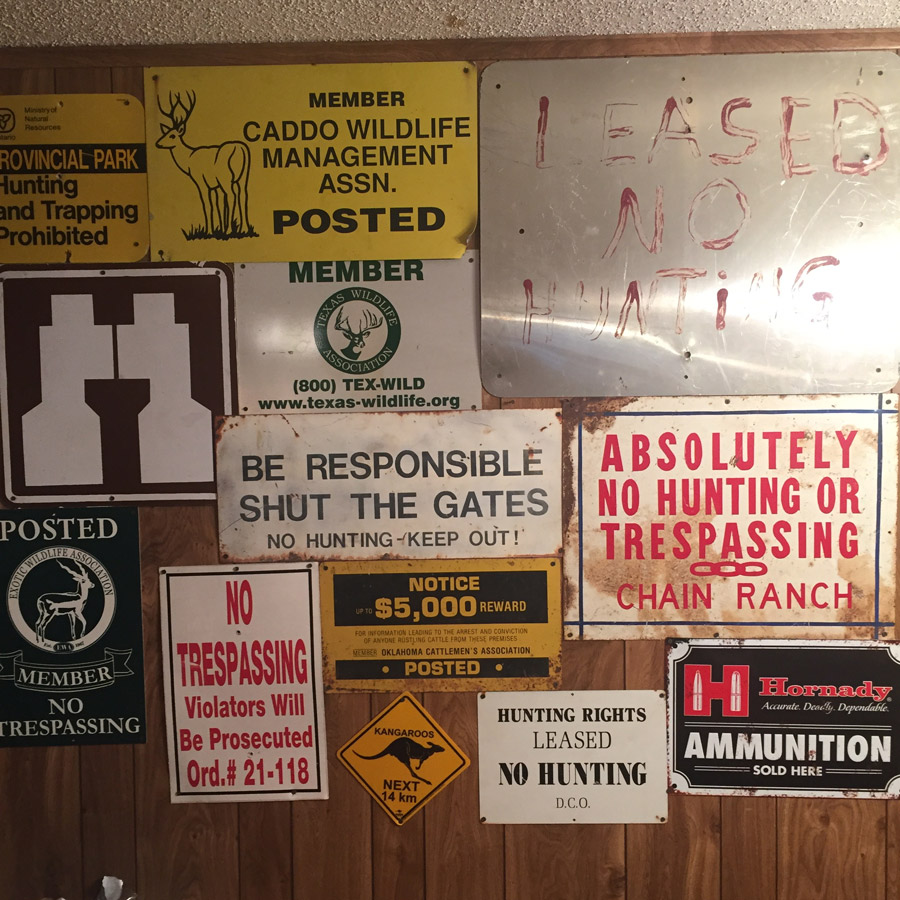
That’s how we found ourselves rolling south in a worn-out Suburban, towing an enclosed trailer full of our butchering gear, folding tables, a generator, and a stand-up freezer. Plus an impressive amount of beer and an average of two rifles apiece. We actually had a destination: the Chain Ranch of northwest Oklahoma. I’d hunted the Chain years earlier for turkeys and whitetails and had killed a few bonus hogs. I knew they had the supply, and accommodations were included in the $200 per-person per-day hunt fee.
The first real surprise of the trip, after overnights in increasingly appalling non-franchise motels, was that we were crowded into a panel van and driven into a high-fence enclosure not far from the Chain Ranch bunkhouse. The driver told us we were hunting the most pig-rich pasture on the ranch, and to shoot straight. He’d pick us up an hour or two after dark. My buddy Ed was bowhunting and was put in a hard-sided ground blind about 50 yards above a deer feeder. I decided to sit with Ed to see the action.
The second surprise of the night, and the best evidence this was no ordinary pasture, was the curling-horned mouflon sheep that swaggered into the feeder. At sunset a sounder of pigs poured out of oakbrush and grubbed around the feeder long enough that Ed encouraged my shot. First pig down: a 60-pounder with pink ears. In all, our crew shot 12 pigs of various sizes.
Then came the third surprise: each pig cost an extra $100, a detail that wasn’t included in my pre-trip accounting. In the course of a couple hours, our crew had accumulated over $1,000 in unbudgeted expenses. The Chain guides said they’d butcher our hogs for an additional fee, which we declined since we were equipped to handle the task ourselves.
It turned out the “pasture” we’d hunted was simply a large hog-proof pen, full of exotics like that mouflon ram and Barbary sheep. The Chain crew told us, as we shared our beer in the butcher shed, that they supplement the captives with free-roaming hogs they trap on the pastures all around. The reason, they said, was to increase the odds of a successful outing for their unguided hunters. Fair enough, but my crew wasn’t prepared, either philosophically or financially, to shoot penned pigs. DIY pig hunting, the Chain guides explained as though they were talking to stubborn third-graders, isn’t a thing. Anywhere we might go, we would have to either pay for pigs or for access, or for both. We pulled out of the Chain early the next morning with a few expensive pork quarters in our coolers and our first acrid taste of the perverted hog economy.
Sooner State Freelancing
We were now left with a decision: head back home, educated and deflated, or push south into Oklahoma, knocking on doors and offering our hog-removal services. As we drove, we scanned the landscape of open pastures, weedy fields, and wind-weary homesteads that didn’t look particularly welcoming. There was no obvious sign of pigs.
Around the Tornado Alley burg of Watonga, I called my buddy Jeff Puckett, a former undercover cop in Norman whom I knew from his work in media relations for Smith & Wesson. When I explained our dilemma, he offered his house and then his friends. He had a buddy with good hog ground south of McAlester in the piney woods of the Chickasaw Nation. Maybe we could hunt there. He’d call. But meanwhile, he said, point the Suburban to Oklahoma City.
Jeff did indeed get us permission on his buddy Mike’s place, and the next day we rolled into our first honest hogs, 1,400 miles from home.
This was hunting, even though much of it was over the automatic corn feeders that are fixtures on every sporting property south of Kansas. Some of the Montana knights missed, others let trophy boars walk, and I managed to kill the smallest pig of the trip: a 3-pound oinker that I whacked with a cedar branch. Mike was our kind of guy, a workaday hunter tuned to the frequencies of charity and adventure. When he mentioned that he was a turkey hunter who had never shot a Merriam’s, we fell all over ourselves offering to hook him up with Montana birds in exchange for his hospitality.
That night back at Jeff’s house, we cut and wrapped our Oklahoma pork, festive and happy to be making meat before our long slog back to Montana, fighting the stiffening spring wind every mile up the plains.
The Magic of Thermals
If my Oklahoma experience proved that connections and reciprocity pay dividends in wild hogs, then my latest hog hunt, with Gage Porter and his fellow guides at Dry Creek Outfitters in Texas, shows that you get what you pay for, which is a satisfyingly Smithian expectation.
I was a guest of Sightmark, the brand that imports Pulsar thermal devices into the United States from Bulgaria. Forgetting for a moment who paid the bills—$400 per night with lodging per person—then this could be considered the bargain of the century for a destination hunter. Our carbines were topped with Pulsar’s flagship thermal riflescope, the Thermion 2, which boasts eight different color-selective viewing modes and a number of different crosshair configurations. It retails for around $4,000.
If the price of a fully outfitted Texas hog hunt—call it $1,000 for a weekend—doesn’t spook you, then the price of thermal sights might. Besides the thermal scope, we deployed Accolade 2 LRF Pro thermal imaging binoculars with built-in rangefinders (another $5,800). That’s a high barrier to participation, but hunting pigs without thermals that literally see into the night is a little like hunting ducks without decoys. You can do it, but you won’t be as routinely successful.
Or make the piles that Porter expects. He says he’s never had a client not kill a pig, and some nights they’ll kill a few dozen. His one-night record is 98 hogs, and he’s killed over 80 multiple times. That’s with his buddies, nearly all of whom play college football somewhere and live on heat-lamp burritos, Monster energy drinks, and Grizzly long-cut chewing tobacco, all procured from Allsup’s, the derelict night-owl institution of West Texas.
They spend the midnight hours driving the back roads of Archer County, Texas, with the headlights off. This is rolling dark, the hog-hunting equivalent of trolling a reservoir.
I’m up first, and after I shoot a lone boar, I produce a folding filet knife and a ziplock bag. I cut out the backstraps, as hot and sticky as the humid night. Porter is disdainful. Hogs are for killing, not eating, he says—especially big boars. But I can’t see leaving the carcasses to rot in the fields. I don’t have to make a pile to have a good hunt. I’m curious to experience thermals, and if I can take home a few bags of wild-pork loin, I’ll be happy.
Countdown to Mayhem
Back in the Yukon, over Jason Aldean and Garth Brooks from a radio station out of Amarillo, talk turns to tornadoes. Everyone here has seen them, most have had to run from them, and some have had their homes leveled by them. Porter is the only one of the bunch who has actually been inside one: “Mass chaos, shit flying, and then sort of spooky quiet.”
The equal and opposite describes the stalk on a sounder of pasture roaches. We troll the section-line roads, the glow of Wichita Falls like a false dawn to our northeast, scanning fields with our thermals until we find a pod of pigs. Porter confirms we can hunt here—Dry Creek Outfitting leases something like 100,000 acres for hog hunting—and then he turns to us in the blacked-out cab of the Yukon.
“We’re gonna walk that fenceline until we get the wind right, then we’re gonna ease up within 60 to 70 yards. Then we’re gonna line up.” His twang tightens. “And we’re gonna kill ‘em all.”
It’s like a tornado in reverse. We’re surprisingly quiet as we walk the harvested wheat field in the dark, the stubble and damp earth muffling our footfalls, each of us fretful we’ll step on a snake or twist an ankle in the hog-rooted ground. We stop periodically to scan the field with our thermal binoculars, confirming the location of the sounder. Thermals detect small differences in temperatures, and on a cool night like this, viewing with the unit’s “black-hot” mode, the hot little pigs stand out like black ants in a sea of foam. As we get closer, the blobs become more defined. I can make out the shapes of heads, then the outlines of ears, and finally even the superheated core of stomachs, digesting high-calorie waste wheat.
We’re all shooting some variation of a suppressed AK-47 chambered in the go-to round of Texas pig hunters: the 7.62×39, formerly known as the 7.62 Soviet or the .30 Russian Short. The AK’s sloppy action is reliable even when dusty or wet, the steel-cased cartridge is cheap, and the 124-grain bullet is effective out to 200 yards. We have either tripods or shooting sticks, and when we get within range, we’ll plant our supports, get our scopes on target, and wait for Porter’s countdown.
But it’s taking us forever to get within range. The sounder is feeding away from us, and we can’t close the distance. We’re 15 minutes and then 40 minutes into our stalk, and Porter whispers that when we get within 100 yards, we’re going to set up and count down. We slog across the field, mud weighing down our boots and my anticipation rising.
Finally we’re as close as we’re going to get. We get behind the rifles, place phosphorescent reticles on our targets, and Porter starts the 3-2-1…. The only sure shot is the first, and then it’s a carnival of light streaks from hot bullets, the ripe-melon thump of slugs hitting either pigs or mud, terrified squeals of gutshot hogs, and the plop-plop-plop rhythm of suppressed carbines running fast. I see through my thermal black heaps—but also plenty of very mobile pigs, some running straight for us, others flushing away.
I’ll have plenty of work for my filet knife, but that’s not what’s on my mind. In 15 seconds, I’ve achieved the goal of any sounder stalk: a mag dump. I’ve sent 30 rounds downrange, a good percentage of them making meat. I realize, standing there in the sudden silence, that I really do want to kill them all.
For 68 years now, my life has been defined by experiences that make my heart jump out of my chest. I have had more than 20 surgeries as a result of great ideas gone bad. Maybe I should’ve stayed in the sandbox rather than climbing over the monkey bars. But the truth is that I wouldn’t have had it any other way.
Once while hiking down into the Black Canyon of the Gunnison in search of trout, I was skirting along a narrow edge when my backpack bumped against the rock wall behind me, kicking me forward and launching me over a vertical drop headfirst. I was certain I was going to die. And yet my life didn’t race before my eyes. I saw no images of my family in my mind. Midway through my fall, I just laughed. If this was God’s way of removing me from the earth it seemed comically inconsequential and random. After a full front flip I lay on a bed of rock with blood covering my face. My hip hit hard, but the blow to my face was only a glancing one. Once I realized I was still alive and going to be okay, all I could think about were the big rainbow trout below me.
I used to ski for a living. In fact, I have skied the biggest mountains in the world at 80 miles per hour, fished the vast oceans, and battled 800-pound marlin. I’ve been on Italian race bikes and driven high-performance cars pushing 190 miles per hour. Still, calling in a screaming bull elk tops the list of exciting things I’ve ever done! I might be known as a tarpon angler, but given the choice between a 150-pound tarpon on a fly or a big bull crashing toward me, I’ll take the elk every time.
I didn’t earn my first elk with the miles of hiking, constant second-guessing of decisions, and mounting frustration that such hunting normally involves. Hunting over a wallow on a private ranch, all of sudden there was a bull in front of me. Nevertheless, from the moment I was introduced to bowhunting for elk, I knew it would be a life-changing experience. Looking back I can say it altered my life as much as the first time I watched a tarpon eat my fly. The experience was the beginning of 17 years of learning—about elk and the nuances of how to communicate with them—that have made me tougher than I ever thought I could be.
Elk-hunting also accelerated my son into manhood. A few years ago I was in Springfield, Missouri, emceeing the International Game Fish Association Hall of Fame induction ceremony when my phone rang.
“I almost got one tonight,” my son roared with excitement. He had called in a bull and a handful of cows and said he was at full draw when one of the cows picked him off and the herd busted.
“Don’t go back tomorrow,” I said calmly. “Let me get on a plane and we’ll do it together!” When I landed in Aspen early Sunday afternoon, Nicky was there waiting. We raced up to the house to get everything ready. It would soon be evening.
Hunting public land around Aspen is nothing short of brutal. The mountain walls rise straight out of the valley floor, and although elk numbers are good, you have to work to find them. The area we were hunting is as beautiful as it is rugged with a variety of pine and aspen flowing over rolling ridges that drop toward the Roaring Fork River. It’s a good place to catch elk moving from their bedding areas to water and feed. There are never more than a handful of elk, but it only takes one. We were specifically looking for the same bull Nicky had called in a couple of days before and hiked for an hour to where we thought the bull would be.
I love evening hunts. The dimming light always gets my heart pounding a little harder, knowing what might happen in the last few hours of daylight. Unlike morning, when it seems as though time is running out, in the evening, things get better by the minute.
We slid sideways to the east and started our slow move up the mountain, using our ears as much as our eyes. When we neared the spot where Nicky had encountered his bull, I threw out a small locater bugle. Nothing. Still, everything just felt right. As we continued up the drainage, we followed a well-used game trail with fresh sign everywhere. If I’d been a bird dog, my hair would have been standing on end. My hearing has diminished with age, so I kept looking at Nicky, waiting for him to point toward some cracking branch up the mountain.
We climbed higher and 20 minutes later, I let out a soft cow call. Instantly a bull answered above us. I told Nicky to get out ahead of me as I pulled a decoy out of my pack and set it up. A few minutes later we gave each other a thumbs-up, and I let out another soft cow call. A cow immediately appeared over a rise in the mountain and came running across the hill toward me. At 30 yards she stopped, gazed in confusion at the decoy, and slid off into the woods. I called again, and the bull exploded with a guttural scream, this time much closer.
I saw him silhouetted on a ridge slightly above us, frozen against the skyline. I could tell he knew exactly where the sound had come from but was canting his head back and forth trying to locate the elk that had made it. I knew Nicky wanted me to try and pull him closer with another call, but I stood my ground in silence. I continued watching him, waiting to see what his next move would be. And then he started toward us.
If he continued on the same line, Nicky would have a perfect broadside shot. As he came crashing closer, I saw Nicky draw his bow. I shifted my focus back to the bull and heard the arrow hit with a solid thump. The elk bolted down the side of the mountain a hundred yards before stopping, blood pouring out of his side. Soon his front legs collapsed and he fell forward. I turned to Nicky and we punched at the sky in a celebration only hunters can understand. We waited a bit before scrambling toward the bull, hugging each other in disbelief that the giant six-by-six lying in front of us was the same six-by-six Nicky had had at full draw on Friday night.
I have certainly lived my life to the fullest, for there is no glory for the timid. But in a life filled with extraordinary moments, calling in that elk with my son is the most memorable by far.[/vc_column_text][/vc_column][/vc_row]
Flying over Alaska’s vast and imposing Brooks Range, I looked down at perhaps the most remote and undisturbed wilderness in North America. Home to Dall’s sheep, grizzly bears, gray wolves, moose, and black bears, the shadows of these mountains also hold an estimated 750,000 caribou that take part in the longest migration of any terrestrial mammal on earth. It was these caribou that had brought us to Alaska.
It was sunny and clear as we flew toward our hunting camp, and my companions Jon and Sara spotted several herds of caribou below. Still, we knew hunting would have to wait until tomorrow; in Alaska you aren’t allowed to fly and hunt on the same day. This gave us plenty of time to set up camp, make a game plan, and drink some whiskey while watching caribou in the distance. That night, the anticipation of the hunt had me checking my watch, eager for daylight.
We woke to a fresh blanket of snow and an overcast sky. Yesterday’s caribou were gone. Walking several miles from camp across the sodden tundra, we reached a high point that overlooked nearly the entire valley. Nothing. After a long and frigid day of glassing, we got back to camp to find fresh caribou tracks stamped in the snow around our tents. It seemed like they were taunting us.
Beaten down from the day before, we reassessed our situation over a cup of coffee the next morning. Midway through, Jon spotted a caribou in the distance, then another, and another until an entire herd was in view. We quickly got our gear together and headed in their direction, using a small rise in the landscape to shield our approach. As we peaked the hill, the ground in the distance appeared to be flowing: Over 2,000 caribou streamed across the land.
That’s when we noticed the river separating us from the herd.
Learn more about Alaskan Caribou Hunting: Subscribe to Strung Magazine Click Here or buy the Latest Issue Click Here