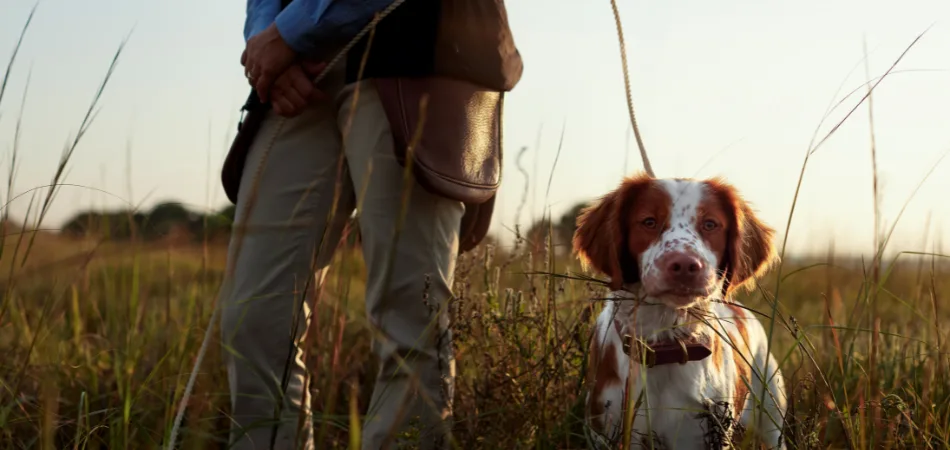
Dr. Seth Bynum is an accomplished veterinarian, writer and photographer as well as an avid outdoorsman. His veterinary practice is currently limited to canine reproduction, although he loves tackling sporting dog and internal medicine cases at his home base of Hayden Pet Medical Center. A devout follower of the “Work to Live” philosophy, Dr. Bynum keeps his clinic schedule as lean as possible to pursue his passion for bird dogs and upland hunting. He can be found afield with a fly rod or shotgun, accompanied by his crew of German shorthaired pointers and a camera he lugs around.
Travel Tips For Road Trips With Your Hunting Dog
There’s hardly a better way to expose your dog to a variety of feathered species and diversity of habitat than loading up your gear and hitting the open road. For some, a bird hunting road trip is an annual tradition, but for others it’s a rare opportunity worthy of intense planning and preparation.
While anticipation is running high and the itinerary of your hunting adventure takes shape, it’s also prudent to sketch out a plan to care for your canine copilot along the journey. A few extra steps in preparation on their behalf can prevent or mitigate a disaster far from home.
Veterinary Care
As soon as you’ve got GPS pins dropped and routes drawn for your adventure, investigate the local veterinary clinics in the area. Take note of their locations, hours and emergency protocols, as many rural clinics now refer complicated (or all) cases to a regional emergency clinic on evenings or weekends. Store their numbers and addresses in your phone before leaving home. In many of the best hunting habitats, scant cell reception may suffice to make a timely emergency call, but it’s highly unlikely you’ll have enough bandwidth for browsing the web for a local clinic’s information, directions or Google reviews.
Food Is Fuel
Dog food is an essential item on your packing list, as it’s undeniably the cornerstone of keeping your hunting companion performing optimally for the entire adventure. I strongly recommend a commercial performance kibble in a safe and sturdy container year-round, but for me it’s a non-negotiable for traveling with dogs. Not only does dried kibble pack a lot of energy in a small morsel, it’s designed to maintain its integrity in the face of temperature and humidity swings of the hunting season. If your supply runs short, most of these performance kibbles can be purchased at retailers along your route or shipped quickly to your hotel courtesy of numerous online vendors.
Travel Stress
Even while relishing the opportunity to practice their life’s work on the road, hunting dogs are prone to travel stress amidst the excitement of an epic road trip. The gut is the quintessential stress organ for the canine, and even subtle stressors can tip the delicate balance of good and bad intestinal flora towards disaster. Novel terrain also offers dogs a fresh menu of new, tasty morsels to sample from the field – an indiscretion that can also contribute to digestion distress. Preventing diarrhea in a working dog should be a top priority while on your trip. Not only is diarrhea a fast track to dehydration for a dog performing at their peak, it’s incredibly challenging to clean on the road.
I reach for Purina’s FortiFlora probiotic in the days leading up to and throughout our trip to help fortify the population of beneficial bacteria in my dog’s gut and safeguard against travel stress. Among my team, the packets are unanimously tasty, and they’re easy to administer at mealtime. As an added bonus, FortiFlora’s high palatability helps entice dogs that are paradoxically disinterested in food after working hard into cleaning the bowl.
Protect Your Water
Fresh, clean water is an essential element for a safe and successful hunting road trip. Don’t skimp on the volume or rely on Mother Nature to provide a reliable supply. Store your water in multiple BPA-free containers in the event of a leak and offer it liberally to your team before, during and after the hunt. As the days get short and nights cool – especially in the West – protect your water supply from freezing. I know from experience there are few things less helpful than 5 gallons of solid ice to rehydrate working dogs in the field or brew a cup of morning coffee.
Closing Thoughts
Above all, be safe and have fun. Cherish the time and experience with your dogs, and don’t hesitate to take photos. With the extra effort you’ve invested in planning for the safety and well-being of your dogs, it’s sure to be the trip of a lifetime.
Seth Bynum is an accomplished veterinarian, writer and photographer as well as an avid outdoorsman. His veterinary practice is currently limited to canine reproduction, although he loves tackling sporting dog and internal medicine cases at his home base of Hayden Pet Medical Center. A devout follower of the “work to live” philosophy, Dr. Bynum keeps his clinic schedule as lean as possible to pursue his passion for bird dogs and upland hunting. He can be found afield with a fly rod or shotgun, accompanied by his crew of German Shorthaired Pointers and lugging around a camera.
With so much discussion about dog food, it’s easy to overlook hydration as an important part of the nutrition of canine athletes. It’s universally accepted that water is essential for life, but it’s often overlooked just how much this basic molecule drives physical activity in a working dog.
Water performs myriad functions in the bodies of performance animals, from lubricating joints to enhancing nutrient uptake in muscles. While dogs can skip many meals without any long-term ill effects, they won’t survive long with a water deficit. Indeed, hydration is a tightly regulated process that every cell in the body depends upon, with very little wiggle room for error.
For this reason, I often field questions from hunting dog owners who express concerns about the volume of water their hunting dogs consume in the field. The good news is most dogs do a great job of regulating their own hydration without any intervention on our behalf. Thirst is a natural response to changes in hydration status. It’s a reflex that dogs involuntarily respond to when the sensation arises, even if that doesn’t coincide with what we think the timeline should be for drinking. Despite our tendency to overanalyze, most thirsty dogs will drink what they need when the urge arises and clean, fresh water is available.
There are, however, a few reluctant or finicky drinkers out there. For the minority of dogs that would rather hunt than drink, you have to get creative in managing their hydration.
USE A SQUEEZE BOTTLE
First, efficient water management starts with water delivery. I strongly recommend that you train your hunting dog to drink from a squeeze bottle rather than a bowl. Not only does this delivery mechanism help conserve water, it’s much easier to keep tabs on how much volume your hunting dog has consumed. If you hunt in western states or other dry conditions, conserving every drop is important, particularly when the burden of carrying it at eight pounds per gallon is literally on your shoulders.
BAIT THE WATER
For particularly picky drinkers, it’s acceptable to bait the water with something highly palatable to entice these dogs to drink when they would otherwise decline. I often reach for FortiFlora from Purina as a safe and effective way to enhance the flavor of water. It’s a highly palatable probiotic that’s easy on both the gut and tastebuds without disrupting your dog’s electrolyte balance.
In a pinch, a light dusting of salted beef or chicken broth can be enough to encourage extra water consumption as well. Keep in mind that a light dusting is all that’s required, not a giant serving of salty bouillon in a dog that’s already behind on fluids.
FLOATING THEIR FOOD
Rehydration can also be achieved quickly and safely at the end of the hunt. Many hunting owners, myself included, employ the tactic of floating their dog’s food during the evening feeding. Simply add fresh water to their food bowl until the dry food is bobbing on top. This technique works well to conserve water in the digestive tract that would otherwise be utilized for rehydrating dry kibble. It also forces dogs to consume the water from the bowl in addition to the kibble they’re craving after a long day in the field.
ASSESSING HYDRATION IN THE FIELD
If you’re still convinced that your hunting dog is not keeping up with his hydration, there are a couple basic ways to easily assess hydration in the field that don’t require a laboratory. An easy and reliable means of checking hydration status is to take note of the frequency of urination and the color of the urine. Well-hydrated dogs urinate frequently, and the color is clear to slightly yellow tinged.
The skin pinch test can also be a reliable means of identifying a dehydrated dog. In a dog with adequate hydration, a pinch of skin between your thumb and index finger will quickly return to its normal position. The same tissue in a dehydrated dog will hold its tent or slowly retract. While easy to detect, keep in mind that a dog with a delayed skin pinch is already moderately dehydrated. In these cases, a rehydration plan should have already been implemented before reaching this state. Prevention is far and away the preferred tactic here. Keeping an eye on urine color and urination frequency will help your hunting dog avoid dehydration before it becomes an issue.
CLOSING THOUGHTS
It’s worth restating that the vast majority of hunting dogs instinctively seek out and consume the proper amount of water given a clean and abundant source along your hunt. Keep track of their consumption and reduce wasted water by using a squeeze bottle, and don’t hesitate to enhance the flavor of the water to encourage finicky dogs to consume a little more. Lastly, consider floating your dog’s post-hunt kibble in half a liter or more of fresh tepid water to safely rehydrate and enhance digestion in your bird dog. With these tips, the only thing they’ll thirst for is another day in the field.
Choosing a hunting dog can be a daunting task. Do you want or need a flushing breed or a pointing breed? A big bold brush buster or small pocket rocket? Male or female? A dog that runs big, or a close-in companion?
It gets even more complicated when you factor in the myriad of proven and dependable hunting dog breeds available from an array of breeders and trainers.
The good news? If you’ve done your homework, it’s hard to go wrong according to experts who cumulatively have seen, trained, trialed and tested thousands of hunting dogs.
Tom Dokken has been training dogs for more than 50 years. He’s written two books on retriever training, invented the famous Dokken Dead Fowl Trainer, created his own line of dog training products, and operates Dokken’s Oak Ridge Kennels in Minnesota, the largest gundog hunting and training kennel in the Midwest. www.dokkensoakridgekennels
Bruce Minard and his son, Neal Minard, of Beulah, Michigan, operate Hifive Kennels, a full time breeding, training and field trial kennel since 1996. The Minards have titled dozens of bird dogs including National Champions as well as the 2019-20 Purina Coverdog of the Year Award. The Minards train all pointing breeds but specialize in English Pointers and English Setters. www.hifivekennels.com
Paul McGagh is a premier professional Spaniel trainer and handler who has won nine National Championships including five Cocker National Opens, two Springer National Opens and two
Canadian Nationals. He’s the only person to win those three Nationals at least twice, and the only person to win the Canadian National with a cocker. Paul, who hails from Northern England, operates Glencoe Kennels in North Dakota and California. While Paul no longer takes on client dogs for training, he continues to compete and win at trials with his own dogs.
While these experts have never met and specialize in different types of hunting dogs, they share many fundamental beliefs and learnings that can contribute to finding the right hunting dog for YOU.
Bloodlines are the bottom line
Paul McGagh can trace his litters back to three bitches going back to 1991.
“I’m not saying there aren’t better lines out there, I’m just saying I know what I’m going to get,” Paul says.
And what he gets is consistently high performing Cocker Spaniels capable of winning National Championships, dogs that consistently put game in the bag, dogs that are good citizens in the house and kennel.
Tom Dokken suggests doing extensive research and buying the best bloodlines you can afford.
“A dog with a proven pedigree is likely to turn out in spite of your inexperience, lack of time, or shortcomings as a trainer,” Tom says. “We train every breed of dog. When the dog has the bloodlines, they also tend to develop a lot faster.”
Bruce Minard says a hunter can find a great dog in any breed if he or she looks hard enough.
“Just don’t buy a dog on a whim,” Bruce says. “Emotions take over and you may end up with a dog or a breed that’s not a good fit for you or your lifestyle. Do your research.”
Neal Minard adds that it’s critical to find the right breeder for the hunting you plan to do.
“Are you hunting ruffed grouse in New England or do you plan to spend most of your time hunting quail in Texas?” Neal asks. “If you can find a breeder that specializes in the type of hunting you going to do, it’s a great start.”
Finally, when selecting a bloodline and a litter, determine what health assurances or concerns may exist. Ask about OFA certification and understand the pedigree when it comes to eyes, hips, elbows or other hereditary diseases.
The Right Hunting Dog for YOUR Lifestyle
What you hunt, where you hunt, and where and how you live are important considerations when choosing your hunting dog.
“The first question you have to answer is what are you going to hunt?” Tom Dokken says. “If the answer is mostly waterfowl and some pheasant hunting, it’s hard to beat a Labrador or any of the retriever breeds. If you’re a die-hard quail hunter, now I’m shifting to the Pointers. If you plan to focus on ruffed grouse, I think of that classic English Setter.”
Tom adds that German Shorthaired Pointers are extremely popular in the Midwest – and across the country because they point, retrieve and tend to have a great personality. “What’s not to like?” Tom says.
Bruce Minard says there are probably more German Shorthaired Pointer kennels in his home state of Michigan than any other breed.
“When dogs come here for training, we don’t get into why the owner chose a certain breed,” Bruce says. “Our job is to train that dog to the best of our ability and to help that dog reach its potential. If you’re a ‘dual hunter’ – waterfowl and upland – you’ll probably go for a retriever. If you’re focused on upland hunting, you might go with a Brittany, English Setter, English Pointer, German Shorthair, German Wirehaired Pointer or other versatile dog. Any of those dogs can and will do the job.”
Tom Dokken says he doesn’t try to steer clients away from certain breeds.
“Instead, we give them information that will help with that important decision. I’d also recommend finding some mentors – people who have experience with different breeds and learning from them.”
And if you’re new to hunting or haven’t hunted with a certain breed, Neal Minard suggests finding and hiring a hunting guide.
“What better way to get your feet wet,” says Neal, who operates Grouse Ridge Guide Service when he’s not training dogs with his Dad. “First, it’s a great way to figure out if a certain type of hunting is for you. It’s also a way to see the different breeds in action – how they work and what they’re capable of. Find a guide that hunts with a breed you’re interested in. You’ll learn a lot in a hurry.”
Finding the right dog also can depend on the type of cover and terrain you’ll be hunting.
“In the Dakotas, for example, there’s a wide variety of cover,” Tom Dokken says. “You have everything from thick cattail sloughs and shelterbelts to the big grasslands and wide-open spaces. In the late season you’re often relegated to thick cover. You want a dog that will go in to the thick stuff and bust the birds. Again, retrievers and other flushing breeds like Cockers and Springer Spaniels are a great choice. But technology now makes it easier to use and find a pointing dog where you can’t see them. That GPS or a beeper collar can tell you the dog is on point 53 yards in that direction. Technology changes the game.”
Bruce Minard believes English Setters are more likely to jump into thick cover like blackberry and raspberry brambles. “A lot of English Pointers tend to like hunting the edges – they say ‘that’s a little too rough for me.’ But there’s always exceptions to that.”
Bruce says English Pointers tend to mature faster and develop faster.
“Your average winning English Setter may be 5-7 years old, where a lot of English Pointers start winning at 2.”
He adds that Hifive Kennels trains a lot of different kinds of Setters – some that work close at 25-45 yards, some that run at 300 yards.
“Buy a dog that wants to hunt with you. No matter how big a running dog he or she is, if they’re a team player you’ll never lose them.”
Considering a Cocker?
Paul McGagh says well-bred English Cocker Spaniels simply brighten your day.
“And if you don’t have a Cocker at least once in your life, you’re going to die of boredom,” Paul says.
While they come in a small package – Cockers (and Springers) can do it all in the field. They’re amazing bird finders, flush with enthusiasm and authority, are trained to sit or “hup” at the flush, and retrieve on command to hand. They also retrieve in water.
When asked to compare Cockers and Springers, Paul answers this way:
“I can bring a Cocker along maybe six months earlier than a Springer. The Springers I’ve done well with have tended to be quite sensitive and introverted. The best Cockers I’ve had have been extroverted. Because of that I can bring cockers along more quickly. I don’t like shy, sensitive Cockers and I don’t do as well with extroverted Springers. And, if you don’t mind being humiliated from time to time, Cockers might be a better choice – at least for me!”
Paul says he believes Spaniels are more adaptive to small yards and suburbia than a big-running Pointer. And while Cockers are excellent at hunting wild upland birds, Paul says they’re also a good choice for preserve hunting. “Spaniels are also terrific in the house when you start them out right.”
At the same time, Paul says Spaniels take some exercise. “They thrive on getting out every morning. But then, so do we. If you can exercise along with your hunting dogs — it’s good for everyone.”
Tom Dokken says being able to exercise a high-energy dog frequently, if not daily, is an important consideration.
“For most hunting dogs, just taking a walk on a leash is not enough of an energy release,” Tom says. “For example, if you live in the city you’ll need to find a place where you can run those dogs to keep them in shape mentally and physically.”
Paul points out that Cockers require some maintenance – especially if you hunt in fields with cockleburs, “stick-tights” and other seeds that fasten to coats of longer-haired breeds.
“I shave my Spaniels’ coats twice a year,” Paul says.
Likewise, Bruce Minard shaves his English Setters to cut down on coat maintenance.
Labrador Retrievers, German Shorthaired Pointers and other breeds with short coats tend to run relatively unscathed through the burrs and seed patches.
Size and gender?
Our experts agree that size and gender boil down to personal preference.
“The vast majority of dogs we train tend to live in the house,” Tom Dokken says. “Male or female, they’re part of the family and socialization and puppy training should start the day you bring the dog home. Obedience is what you accept. Unwanted behavior – if you accept that – is what you get. You have basic rules, black and white. If you’re consistent, and the family is consistent, you’ll get the obedience and behavior you want. ”
Tom says some people like small females, others like big males. The important part is keeping them in good body condition and at ideal weight. “In humans, you don’t see a lot of 250-pound long-distance runners,” Tom says.
Bruce Minard adds that proper nutrition for puppies and adults is paramount. “We feed and trust Purina,” he says. “Our dogs look great and perform well thanks to Pro Plan.”
A look inside the litter box
Once you’ve settled on a breed, done your research, and found a breeder and potential litter that suits you and your lifestyle – it’s time to pick a puppy.
Bruce Minard likes a bold puppy that comes right up and wants to play.
“I want a puppy that wants to be part of what you’re doing and wants to be with you constantly,” Bruce says. “That’s a dog that will hunt for you, and with you. It’s a natural bond. He doesn’t know why he wants to be with you, but he does, and that’s the one I’ll pick.”
Paul McGagh agrees and says he believes success in the field and at the field trial equates to three factors:
25 percent breeding
25 percent training
50 percent relationship
“There’s no question you need the right breeding, good training, good birds and all that. But in my opinion, the biggest part is the relationship. Make them love to be with you.”
The intangibles: Prey Drive, Bird Finding, Biddability.
Tom Dokken likens it to walking a tightrope.
“You like a dog that’s manageable, but one that also has that inherent prey drive,” Tom says. “It’s easier to get one under control than to try to give one something they don’t have to begin with.”
He likens it to the kid who tries out for the basketball team but doesn’t have the athletic ability, intensity or talent to compete. “That kid won’t be a starter. Even if he makes the team, he’ll be on the bench. When it comes to dogs, if they don’t have that prey drive, most of my clients will have trouble pulling that out.”
Tom says some clients have even insisted they don’t need a “really good dog” because they only hunt a few weekends each year.
Tom’s response?
“That’s like saying ‘I don’t go fishing that much so I don’t need a motor on my boat.’ Sure you can get by with a set of oars, but it’s not going to be a pleasurable experience! If you only hunt a few weekends each year, then you need a really good dog! You can take an average dog and hunt them a lot and they can turn out to be a pretty decent dog. If they don’t get out much, they need to be really good and well-trained when they do get out.“
First and foremost – The Foundation
No matter the breed, every great hunting dog needs a solid foundation. Even when a puppy has been well-socialized and has the right stuff – the nose, the desire, the temperament, and prey-drive – he or she still needs the basic building blocks and training regimen that make up the proper foundation and will last a lifetime. Think of building house on a shaky or shoddy foundation. It’s likely to fall down. Same goes for your hunting companion. Depending on the breed and whether it’s a flusher or pointer, teaching commands like sit, stay, come when called, heel, down, place, and kennel are part of that foundation. So is the trained retrieve. Advanced training requires a solid foundation.
“We recommend foundation training at a minimum,” Bruce Minard says. “We have a puppy foundation training program that typically starts when the pup is 6 months of age. That’s a key development time and it’s hard to get that time back. You can teach a dog to learn. With the proper foundation, even if you set it on the shelf, you can always go back.”
Tom Dokken agrees and again advocates doing research when selecting a pro trainer.
“A good pro should have a track record of setting a good foundation and be able to show you that foundation. If it’s done right, it’s always going to be there. Let’s say hunting season ends and you kind of let training slide during the off-season. If the dog has the proper foundation, it can be tuned up rather quickly. If you have no foundation whatsoever, you have nothing to work with – no matter the breed.”
Paul McGagh adds that the first six months of a puppy’s life is a special time.
“So important,” Paul says. “The habits you give them, the foundation you build carry on for a lifetime.”
He points to a litterbox full of 3-week-old English Cocker Spaniel puppies.
“We’ll keep one,” he says. “Six months from now I’ll have taught that puppy to sit, stay and retrieve with the place board. It will have that foundation and then I’ll start more serious training.”
Paul believes in taking every “event” and making it a training opportunity.
“When you feed them their Pro Plan, just don’t throw the food bowl down and walk away,” he says. “Have them sit. Wait. Make eye contact. Turn it into a training moment.”
Wild cards
Although Paul McGagh made a career by winning championships with Spaniels, a few years ago he added a talented English Pointer puppy named “Rye” to his stable of spaniels. Paul trained Rye to be steady to wing, shot and fall. He adds some pizzaz by sending in his Cockers for the flush and retrieve while Rye holds point.
“I must admit I had a real misperception about English Pointers,” Paul says. “I knew they were terrific bird finders, but I thought they were just raw-boned hunting machines without a lot of personality. I would say Rye has as much personality as any of my Spaniels and is just as good in the house. If I could only have one dog out here in the Dakotas hunting sharptail, it would be a Pointer.”
Likewise, Bruce Minard considers himself more of an English Pointer man.
“We have a Pudelpointer here right now that we’re training that’s really special,” Bruce says. “Yes, I’m an English pointer guy but I would LOVE to own that Pudelpointer.”
And Tom, after 50 years training dogs, still enjoys ‘training the trainer’ and working with owners of any breed.
“When we get to the latter stages of training, that’s when we bring the owners in. We set a standard and show the owners – here’s what your dog is capable of and here’s what you need to do to keep it that way.” Dogs are smart. It will take a dog about 15 minutes to figure out what they can get away with. The owner – and his or her family – need to take over the training and enforce the rules. The dogs will respect that. And you will have a dog that hunts for you!”
BACK TO SCHOOL – How to Build a Better Hunting Dog
Every year, thousands of hunting dogs go to professional trainers across the country. Many are puppies – youngsters full of promise and potential. Some are veteran sporting dogs that need a tune-up, or a total makeover. Some go away for weeks, some for months. Many come home well-trained and stay well-trained. Some don’t.
Choosing the right trainer, at the right time, with the right preparation can help make good dogs great and pay dividends for life, according to experts at two renowned training kennels.
Smith Kennels has been a force in the bird dog world for decades. Founded in 1956 by the late Ronnie Smith Sr., and now operated by the husband-and-wife team and veteran trainers Ronnie Smith Jr. and Susanna Love Smith, Smith Kennels takes in dogs from across the country and works to build confident, proficient bird dogs that consistently perform in the field. Ronnie’s uncle is legendary trainer and Bird Dog Hall-of-Famer Delmar Smith. Ronnie has run guiding operations on the 6666 Ranch, divisions of the King Ranch, and has even guided U.S. Presidents. He took over Smith Kennels in 1982 after his father passed away and was joined by Susanna in 2006. Susanna is a fourth generation West Texas rancher who grew up training horses and bird dogs. Together, the Smiths moved the operation from Big Cabin, Oklahoma to a new facility near Pawhuska, Oklahoma, and continue the family tradition.
“Our number one goal is to build better bird dogs,” Ronnie Smith says. “Going to school – so to speak – and having formal training can help teach dogs to learn how to learn.”
Susanna Love Smith says owners should have an end-goal in mind before they send a dog to a trainer. “We strive to train a dog that an owner can take anywhere, in any environment, and be successful.”
Since 1990, Jim Van Engen and his Wisconsin-based Right Start Kennel has specialized in taking young retrievers through basic training and preparing them for advanced training and competition. Jim estimates he’s trained more than 1,500 dogs, including the foundation for nearly 200 AKC Field Champions with 13 of those dogs earning a total of 16 National Championships. A former high school teacher, Jim’s training philosophy is to develop a dog to its full potential – whether competing in field trials, hunt tests or as a gun dog and hunting companion – within a structured, progressive training program.
Jim says pre-school starts when the owner brings a new puppy home.
“Teach your dog to be a good citizen starting at seven- to eight-weeks,” Jim says. “Expose them to people. Take them everywhere. Establish boundaries. Let them know what they can and can’t do. When owners take time to teach dogs how to learn at a young age, those dogs tend to breeze through our program.”
FIRST, DO YOUR HOMEWORK
Finding the right kennel, and the right trainer takes time, effort, and research.
“The baseline for a kennel is it must be safe, clean and well-maintained,” Susanna says. “The trainer needs to be somebody you can relate to and have a dialogue with. You need to be able to talk to and learn from that trainer in a format you can understand and communicate to your dog for the rest of its life.”
Jim Van Engen agrees and advocates visiting the facility – multiple times if possible – depending on its proximity to the owner.
“I also want to see the dogs they are training or running,” Jim says. “Do they look stylish, or scared?”
Jim says the health and welfare of dogs in a trainer’s care are paramount.
“Do the dogs look healthy? Are they in good shape? Diet is a key factor in the health of these athletes and we feed top quality Purina Pro Plan Performance dog food.”
Jim also recommends finding and talking with other owners who have had dogs trained at the facility. “Word of mouth can be helpful. What was their experience? Were they pleased with the results? At the same time, you can do your own research. If the trainer runs field trials, do some of the dogs place? If the trainer runs hunt tests, do they pass?”
Another important consideration when choosing a kennel is access to good training grounds.
The Smiths’ Prairie Hills Ranch and the rolling hills of Osage County, Oklahoma enable Ronnie and Susanna to literally walk out the door and go to work. Likewise, Jim strives to find the best training areas and works with his retriever pro colleagues to share training grounds and provide a mix of land and water opportunities. “I want to make sure my dogs are seeing everything and getting exposed to everything they might encounter at a field trial or a hunt test or during an actual hunt.”
TIME TO SEEK PROFESSIONAL HELP?
Ronnie Smith looks for two things in a bird dog: “One: a dog that is so well-socialized that it can mitigate stressors, adapt, and move forward. That’s something that carries on throughout life and will help him or her in any environment. Two: a dog that has a high prey drive – a desire for game. That will help sustain him or her throughout the training process.”
For dogs with little to no experience on game birds, the Smiths offer a two-week Field Introduction class that builds desire to hunt and introduces dogs to elements of the field. Dogs can be as young as four months to participate, but mature dogs that lack experience are encouraged as well.
Next, the 90-day Basic Formal Training class teaches dogs the foundational skills every bird dog should know.
“We call these our Core Behaviors,” Ronnie says. “Bird dogs need to go with you, come to you and be still or stand still.”
When is a dog ready for formal training?
“We like it when dogs are mentally and physically mature enough for our Basic Formal Training class. That’s typically around 1 year of age for bird dogs. But it depends on the dog.”
At Right Start Kennel, Jim says most retrievers come in for basics training at about six months.
Jim recommends dogs have basic obedience and lots of socialization.
“Ideally, we want a retriever puppy to know its name, understand the word ‘no’, come when called and sit and heel on command. A lot of how long they stay here in training depends on what owners have done before I get them,” Jim says. “The majority of my field trial dogs are with me for 18 months and up to 2 years. Hunting dogs are typically in training for about three months. If you’ve done nothing with them, you’re going to pay for another month!”
Jim laughs and gives an example. “I was a high school teacher. The kids who were wild – kids whose parents allowed them to run wild – were a lot harder to teach. Same with dogs. I’ve had clients bring dogs over and say ‘Oh don’t let him loose – we’ll never catch him.’ That dog will probably need some extra time and attention in training.
“I’ve also had people say, ‘I didn’t do anything with the dog because I didn’t want to make a mistake.’ Well, that’s your first mistake.”
Ronnie says training is relationship-based and owners should be aware of how they impact a dog.
“Your dog is a reflection of what you allow and condone,” Ronnie says. “We don’t have a relationship with that dog when they come here for training. We establish it.”
One of Smith Kennels’ themes for 2024 is training owners not to teach with words. It’s part of a decades-old training philosophy perfected by the Smith family and known as “The Silent Command System.”
“Bird dogs live their world based on body language,” Ronnie says. “Most of the talking, the baby talk, is for us humans. They’re trying to teach the animal English. If you can teach a behavior without talking, then you’re actually training. When you can put your hands on a dog in a positive way and instill confidence, then you’re actually training. When you get the behavior you are training, then you can name it.”
IT PAYS TO PLAN AHEAD
Good trainers and top-notch facilities may be full and typically have a waiting list. Owners need to start looking for a training kennel when – if not before – the puppy is whelped.
“At Smith Kennels, we start accepting reservations about a year in advance,” Susanna says. “We think it’s a good idea to start thinking about where you want to send that dog for training when you get that dog as a puppy. That allows you to prepare and develop that puppy for training in a way that aligns with the trainer’s program.”
She adds that sometimes last-minute openings occur, so keep in touch with the prospective trainer.
Jim Van Engen is retiring this year but also emphasizes lining up training options well in advance.
“Ask questions including two big ones – how many dogs do they have in training and what kind of help do they have? At Right Start Kennel, we restricted it to 24 dogs. My brother Brian has been helping me for 25 years. I know how many dogs we can get done in a day. When the number of dogs goes up, the quality typically goes down.”
The Smiths agree and figure a maximum of 15 dogs per trainer.
“Between Ronnie and I we do not accept more than 30 dogs per class,” Susanna says. “We actually prefer 24 to 25 per class.”
SCHOOL’S OUT
After several months of training, it’s time to go get your dog.
“The hand-over is so important,” Ronnie says. “The trainer who just opens the gate and hands you your dog is not the trainer you’re looking for. We want owners to call us and check in to make sure we’re all on the same page. And we ask owners to spend time with us to go over the training and learn how to manage the dog. If you don’t spend time learning and working with your trainer, if you don’t learn the cadence, the timing, the commands – eventually all that training will erode.”
Susanna adds, “Dogs aren’t like computers. You can’t program them, and training doesn’t program them for life. Training gives dogs education that can be used or forgotten in short order.”
Jim Van Engen encourages clients to participate in training sessions.
“I do tell them to stay away for the first month when we’re getting to know the dog – after that, come as much as you like,” Jim says. “It’s important that clients come and be with us. You need to learn what we do and why we do it. And you need to know the commands and be consistent.”
FIXING A HOLE
Even with solid training and a good hand-off, many dogs tend to revert to old or bad habits upon returning home or during the off-season.
“As professional trainers, we call this job security,” Jim says and laughs. “Dogs are so smart. They know what they can get away with – especially if you’re not consistent or relax your standards.”
For retrievers, it might be steadiness issues or “creeping” before being sent for a retrieve, or simply ignoring commands and basic obedience.
“I’m a big fan of tune-ups,” Jim says. “We have dogs come back and often within two or three days we have them right back where they need to be. It’s kind of funny, the dogs get here and think, ‘Oh boy, that’s Jim. We have to listen again. They have rules here.’ “
The Smiths offer an Annual Tune-Up class for existing clients. The month-long class is typically scheduled for September.
“It’s an opportunity to put some polish on that training and prepare dogs mentally and physically for the upcoming hunting season,” Susanna says.
FOOD FOR THOUGHT
Like Jim Van Engen, Ronnie and Susanna Smith are longtime proponents of Purina.
“We’ve found that across the board, Purina Pro Plan is a food that performs consistently for all breeds of bird dogs during reproduction, growth, training, and under the rigorous demands of field trials and professionally guided hunts,” Ronnie says.
Susanna says preparing a bird dog to go away to school for training can include teaching your dog to eat.
Ad lib feeding – leaving kibble out for grazing and consumption throughout the day – isn’t practical at training kennels and typically doesn’t work.
“That means teaching your dog to eat a full serving of food once a day in a 15-minute window,” she says. “Dogs that are in training or traveling or hunting multiple days can get the nutrition and calories they need to perform to their full potential.”
Feeding time at kennels is part of an efficient daily routine. Each dog receives the appropriate ration, consumes it, and then has time to air and eliminate.
That routine translates to the field. Dogs hunt hard, cool down, and are fed a meal at the end of the day to refill the gas tank.
“Dogs learn and adapt very quickly,” Susanna says.
EARN EXTRA CREDIT – ATTEND A SEMINAR
A great bang for the buck happens almost every weekend around the country. Talented sporting dog trainers – often in conjunction with clubs or associations – offer day or weekend seminars that cater to beginners and professionals.
“In addition to learning about the trainer and training techniques, a seminar is a great opportunity to see a lot of different breeds of bird dogs and a lot of training situations in real time,” Ronnie Smith says. “You’ll see more dogs in a weekend than you’ll probably own in your lifetime.”
Ronnie adds that seminars are not only beneficial for working with your current dog, but also can help owners in selecting for future dogs, including the breed, the breeder, or the trainer.
OLD SCHOOL
Another way to accelerate the learning curve is by tapping into training resources, including books and DVDs.
Delmar Smith once said, “If you want to train like a pro, you’ve got to think like a dog.”
The knowledge, wisdom and experience of old and new dog trainers are captured in hundreds of classic books, DVDs and now – conveniently packaged as digital and on-line content.
Jim Van Engen is retiring, but aspiring retriever enthusiasts can still tap into his 48 years of dog training experience by watching his “Right Start Your Retriever” DVD. The two-hour DVD focuses on taking young dogs and progressing from 7 weeks to 7 months.
“It is rewarding to see dogs develop and progress,” Jim says. “I still like it a lot after 48 years.”
The Versatile German Wirehaired Pointer – When Pointing Dogs Become Duck Dogs
By Don Thomas | Photos by Lori Thomas
This piece originally ran in the Fall 2021 Issue of Strung Sporting Journal, Titled “Our Water Rug” – it has been adapted for digital use.
“…in the catalogue ye go for men;
As hounds and greyhounds, mongrels, spaniels, curs
Shoughs, water-rugs and demi-wolves are clept
All in the name of dogs.
William Shakespeare, Macbeth, Act III, Scene I
German Wirehaired Pointer…in the Duck Blind?
I knew as soon as we finished setting out the decoys that December afternoon that we were about to enjoy a mallard shoot. During the late season in the Northwest, it’s not unusual to have a steady diet of northern greenheads appear uninterrupted over the decoys. Most duck hunters would write that development off as a nice problem to have, and I can’t blame them. Mallards, after all, are wary, challenging, large, and delicious. On the other hand, I have always enjoyed variety on waterfowl hunts even if that translates into nothing more than a few flocks of teal to remind me that I’m not as good a shot as the mallards made me think.
Before Lori and I could get ourselves organized inside the blind, I heard a chorus of distinctive mallard feeding chuckles overhead. After enduring several days of gray ice fog that rendered photography impossible, the gloom had lifted and left the marsh bathed in golden light. Unable to resist, Lori chose to leave her shotgun unloaded in favor of her camera, leaving the shooting to me, at least for the time being. I did not object.
The dogs—Rosy, our veteran female yellow Lab, and Max, the younger of our two German wirehairs—settled quietly onto the dog platform as mallards circled repeatedly without committing to the decoy spread. Of course, the first pair to drop in were hens, which we don’t shoot intentionally. Then one drake finally flew into range, or as we call it, the Circle of Death. When I rose and shot, it plopped down uneventfully just beyond the decoys.
I really wasn’t surprised when Max broke and saved me from a difficult decision. With birds in the air all around us I might well have delayed the retrieve, but I was there for the dogs as much as the shooting. Rather than fretting over flaring birds and lost opportunities, I chose to enjoy watching Max charge through the decoys leaving curtains of sun-lit waterdrops suspended in his wake.
Max wouldn’t fit most hunters’ stereotypical image of a water dog. A large, powerful, handsome wirehair, he had served us well in upland cover as both a pointer and a retriever. We had taken him along on some duck hunts just for fun, but now we needed to expand his job description considerably because of some family drama in the kennel.
Rosy has been a terrific waterfowl dog but is now beginning to show her age, reminding me of the great tragedy inherent in the relationship between gun dogs and hunters—we live longer than they do. I now anticipated one or two more seasons with her at best. Maggie, our excellent female German wirehair, is heading to the geriatric wing as well. How she keeps hunting tough Montana pheasant cover as hard as she does at age twelve is beyond me, but I know that isn’t going to last forever either.
Recognizing this inevitable development, I had already begun to groom replacements for our two stalwarts. Max was meant to take over from Maggie in upland cover and was doing a fine job of it. I intended to replace Rosy with the young female Lab we’d named Kiska. That idea looked good on paper, but she proved to have one totally unexpected flaw: she hates the water. However, she hunted quite capably in upland cover and between her and Max I felt comfortable that we would be well served on dry land even without Maggie. I will credit Lori with the suggestion that we replace Kiska as Rosy’s understudy with Max, which turned out to be brilliant.
And why not? Max had already proven retrieving ability on sharptails and pheasants. As out of place as he might look in a duck hunting camp populated by Labs and an occasional Chessie, when we took him along with us occasionally during his first two seasons, he showed plenty of enthusiasm for water (and certainly more than Kiska did). Whatever rough edges he now showed in the duck blind were purely my own fault, since I’d poured all my waterfowl training energy into Kiska even though this now appeared to have been a lost cause. So, we resolved to spend our covid season duck hunting time with Rosy and Max.
Shakespeare and Water Rug Dogs
One of the great pleasures of reading Shakespeare is discovering new language gems every time I re-read one of his plays (even the bad ones, and he did write some). I don’t know how many times I read Macbeth before I noticed the passage cited at the beginning of this piece and recognized it for what it was: a brief catalog of Elizabethan-era dog breeds. This insight should not have taken as long as it did. In a high school honors English class back in the 1960s, I wrote a well-received essay titled “Canine Imagery in King Lear,” and rode that pony all the way through years of English literature classes in college. Nowadays, someone would have stolen it, posted it on the Internet, and left me high and dry.
What really caught my eye during that moment of insight was the term “water-rugs.” Imagining Max emerging from a pond dripping wet with a mallard in his mouth, I could visualize exactly what Shakespeare had in mind. But what, exactly, was a water-rug? Usage of the term appears to be unique to Shakespeare, which is not unusual. The origins of dozens if not hundreds of Shakespearean terms appear to be without precedent and confound scholars to this day. What, for example, do the words “aroint” and “ronyon” mean? (Both appear in the same line from one of the Witches in Act I of Macbeth.) Such questions will likely provide fodder for doctoral theses for another four centuries.
After some investigation, I agreed with the consensus that Shakespeare was referring to the English water spaniel. We know he was aware of the breed, for in Act III, scene I of The Two Gentlemen of Verona, the character Launce refers to his love interest as having “more qualities than a water spaniel,” likely a comment on the breed’s versatility. Since neither the Irish nor the American water spaniel existed at the time, he must have been referring to the English version.
The English water spaniel, alas, is with us no more, the last known representatives of the breed having disappeared around 1930. It had a good, long run though, with written descriptions of the dog appearing as early as 1570, right before Shakespeare wrote Two Gentlemen, one of his earliest plays. The dog’s job description was right up our alley. Written in 1820, The Sportsman’s Repository advises that anyone interested in hunting waterfowl “had best use an English Water Spaniel.”
As nearly as I can tell, the breed disappeared simply because its enthusiasts were disorganized and more or less let it disappear by neglect. Its genetics probably live on however, in the American water spaniel, the flat coated retriever, and possibly others.
And, by way of Shakespeare, it has left me with a wonderfully idiosyncratic term for my German wirehair when he emerges from the water soaking wet. He really does look like a water-rug, whatever that might be.
Dogs and Difficult Retrieves – How Does the German Wirehaired Pointer Fare?
One characteristic that has served to distinguish Rosy from so many of the other good Labs I have trained is her consistent ability to make really difficult retrieves—not just those on birds that have fallen at a distance, but the kind involving live birds, long ranges, obstructions, ice, thorns, and enough other complications to put the estimated probability of recovery in the snowball-in-hell category. Those aren’t jobs for dogs that are still learning, and I admit that during the first season Max began to accompany us on duck hunts I saved the tough stuff for Rosy, for three reasons. I didn’t want Max to get frustrated; I wanted Rosy to live out her final seasons in the glory she deserved; and I hate losing game.
On the afternoon in question, we had a half-dozen greenheads hanging on the duck strap before we got a break from our steady diet of mallards. The tearing silk sound that arose suddenly behind the blind was higher pitched and moving faster than anything I’d heard from mallards’ setting wings all afternoon. I knew the new arrivals were green-wings before I ever saw them, but that foresight provided no practical advantage. As is so often the case with teal, they were over the decoys and out of range before I could raise my gun.
Another characteristic of teal behavior, however, is their willingness to come back and take another look. When the flock performed an elegant high-speed turn a hundred yards in front of the blind, they gave me what I thought would be plenty of time to prepare for their second pass through shotgun range. Actually, “plenty of time” proved overly optimistic, for I never even thought about my second barrel.
Although my first shot connected, the bird hit the water swimming hard and immediately began a Michael Phelps sprint for the reeds on the far side of the pond. “I’d better send Rosy,” I said as I broke my gun.
“Let Max try,” Lori said. “He needs to learn sometime.” My wife has always served as Max’s principal advocate, both around the house and in the field. I suspect this is because she recognizes my special affection for Rosy and like any good mother wants all the kids to get their fair share of attention.
When I gave Max the command to fetch, Rosy began to express her disappointment, not through loud obnoxious whining but by whimpering softly as if her heart had been broken. “She’ll get over it,” Lori assured me as we watched Max charge across the pond. The water was shallow enough so that he could lunge faster than the wounded teal could swim, and he had marked the fall accurately. Of course, when dog met duck the wounded teal began to dive, and the real rodeo began.
Different dogs handle this difficult situation in different ways. One of my early Labs would dive completely underwater and remain submerged for frighteningly long lengths of time until he swam the duck down in its own element. He was barely more than a puppy the first time I saw him do that, and I was afraid that he had tangled himself up in some underwater obstruction and drowned until I saw him pop up 10 yards farther across the pond with the duck in his mouth. The dog had obviously maintained visual contact with the bird underwater. That trick wasn’t anything I taught him. It was simply the way he dealt instinctively with diving ducks, and I saw him do it repeatedly over the course of his long career.
The common problem for retrievers is simply losing track of the duck when it dives. Wounded ducks bring their own bag of tricks along to these contests between predators and prey. They usually change directions while underwater to throw the dog off-track, and when they surface, they swim with the lowest possible profile above water to make themselves hard to see. These maneuvers can drive even veteran dogs to distraction. Although I generally avoid setting inexperienced dogs up to fail by giving them difficult tasks, Lori was entirely right when she pointed out that Max was going to have to learn to deal with this situation eventually.
Overall, Max handled the challenge well, although he didn’t snag the duck until it had evaded him repeatedly. Standing up in the blind, I could see the duck more clearly than the dog could when it tried to swim off just below the water’s surface, with the tip of its bill tracing a delicate V across the surface. While Max’s handling wasn’t fine-tuned, he knew enough to turn in the general direction my arm indicated. The teal finally zigged when it should have zagged, and Max returned to the blind with the bird in his mouth and his head held as high as if he’d just won the Westminster Dog show.
As the light level began to drop, Lori finally traded her camera for my shotgun. Her first shot produced a banded drake mallard, always a bonus on any duck hunt. Modern technology—the Fish and Wildlife Service duck band app on her cell phone—quickly informed us that the bird had originated in the Northwest Territories. Thanks to pandemic travel restrictions, that mallard had flown farther in 2020 than we had.
By the time we left the blind just before sunset, I was laboring under the weight of two Pacific Flyway limits, mostly greenheads supplemented by three green-wings. Both dogs seemed very happy, and I felt confident that Max, our water-rug, would be capable of taking over from Rosy when the time came.
Thinking Outside the Proverbial Duck Dog Box
A digression into the arcane world of Shakespearean scholarship may seem out of place in what is at heart a hunting story. However, the thesis of this piece is broader than either of those topics.
Duck hunters, like those who pursue any passion, tend to rely on the familiar while failing to appreciate the value of what lies outside the proverbial box. Ask a hundred waterfowl hunters to perform a quick word association test with the phrase “duck dog,” and 90-odd responses will likely be “Labrador retriever” (as would my own). You’ll hear about a few goldens from those who love the breed’s beauty, tractability, and utility in upland cover, along with a Chessie or two from folks who would probably own pit bulls if they didn’t hunt ducks. Any answers other than those drawn from the Big Three would definitely be outliers.
In fact, people have been hunting waterfowl with all kinds of dogs for centuries, starting long before Labs, goldens, and Chessies even existed, at least in their current form. The English water spaniel may no longer be with us, but its utility as a waterfowl dog was documented in word and art centuries ago. In addition to Max and other GWPs, I have personally hunted ducks with shorthairs, “English” pointers, and Brittanies. I once spent a pleasant morning in Alaska sitting in a rudely constructed blind with a friend and his Boykin spaniel. And then there is the rest of the pack, the retrievers about which we hear too little: American and Irish water spaniels, flat coats, curly coats, and others even more obscure. Interestingly, most of these breeds, in contrast to Labs, have coats that could qualify them as water-rugs.
Granted, most representatives of those alternate breeds with which I hunted didn’t perform as well in water as my better Labs, but most managed to provide good company and get the job done. We love the dogs we love, but that shouldn’t blind us to other possibilities.
Don Thomas, Strung’s managing editor, grew up in an outdoor family and has been hunting and fishing for nearly 70 years. He has spent his adult life in Montana and Alaska working as a rural physician, and has also been a pilot, commercial fisherman, and bear hunting guide. He has hunted and fished on five continents, written over 20 books on the outdoors, and continues to write for multiple magazines. His latest book, “On The Wing” is a reflection upon his 60 year experience hunting upland game birds and waterfowl. The text includes insightful observations on wildlife biology and habitat. It includes a lot of informative stories and information about hunting dogs, especially Labrador retrievers and various pointing breeds. While much of the material focuses on his current home state of Montana, settings also include Alaska, the desert Southwest, and Texas as well as international destinations such as New Zealand and multiple locations in Southern Africa. The text is supplemented by 45 high quality color photographs. Find out more and purchase his books at https://www.donthomasbooks.com/
Editors Note: As ptarmigan season starts to open up in various game management units across the Alaskan landscape, we thought this piece by Don Thomas – originally published in Pointing Dog Journal and adapted for digital use by Strung Sporting Journal – would be timely, not only as a source of reference, but also as entertainment and sheer good reading, for which Don Thomas is renowned. Note that the season on Ptarmigan is by game management unit – be sure to look up specifics before venturing out (as a reference, here are the 2024-2025 regulations).
In Alaska, getting there is half the fun… at least in theory. As the fog burned slowly from the surface of the Naknek River, my wife Lori and I helped our old friend Dan Michels top off the fuel tanks in the Beaver and coax Max, his German wirehair, up the steps and into the back of the airplane. By the time we’d finished all our pre-flight chores, the last of the fog had dissipated. A few minutes later we were lifting off the river and heading south into the heart of more wilderness than most residents of the Lower-48 could ever imagine.
Indeed, wilderness isolation and gorgeous tundra terrain form an integral part of ptarmigan hunting’s appeal. In the era of locked gates and trespass fees “Outside”, roadless Alaska’s all but infinite horizons still promise ambitious hunters more cover than they can walk in a day, a week, or a lifetime, all free of fences and offering no one to object to your presence but the bears.
Thirty minutes later Dan had the flaps down in preparation for landing on a nameless pond in the middle of nowhere. I liked what I saw from the right seat: long miles of low tundra ridges that promised dry footing and held just enough willows to provide birds with cover without obligating us to bust through any brush. Factor in clear skies overhead and tundra foliage aglow with the blush of autumn and I couldn’t imagine a more promising beginning to a hard day of bird hunting, Alaska style.
After securing the Beaver, we climbed the first low ridge and fanned out behind Max in a pitch-perfect rendition of what our British counterparts would call rough shooting. Bristol Bay ptarmigan are funny, unpredictable birds. Sometimes I’ve found them so thickly concentrated that I didn’t have to go more than a few hundred yards from the airplane before I’d killed as many as I wanted or ran out of shells. Then there were days when I had to gird up my loins and cover some serious country just to watch a few flush out of range. When no warning clucks greeted us as we topped the first rise, we set out to earn our ptarmigan the old fashioned way: by walking.
A Digression about Caribou Habitat…
Fortunately, despite the countless time I’ve spent out in the Bush I’ve never lost my fascination with tundra habitat. As we hiked, I pondered a mystery that had long left me perplexed: the near total disappearance of the Upper Peninsula caribou herd. When I lived in Alaska fulltime during the 1980’s I hunted this country hard for caribou. Even though I limited myself to a traditional longbow I seldom came home without a good bull, often after glassing thousands. Then a decade or so ago, they simply vanished. As I walked along behind the wide-ranging dog, I studied the “reindeer moss” (it’s actually a lichen) that appeared as irregular yellow patches against the green and crimson ground cover. Although vital to the caribou, the stuff underfoot all looked sparse and skimpy compared to its exuberant, leafy appearance as I remembered it from years ago. Therein, I concluded, lay the explanation for the caribou’s sudden disappearance, and I found myself agreeing with the biologists who felt that the once rapidly expanding herd had simply eaten itself out of house and home.
But leave it to bird dogs to interrupt my deepest thoughts… “Point!” Dan cried suddenly, and when I looked up I spotted Max locked up tight as a tetanus victim beside a low clump of willows a hundred yards away. Ptarmigan destined to flush wild—more on this subject later—usually do so at once, and since we’d neither seen nor heard any birds in the air I guessed that whatever Max was pointing would hold tight while we approached. And indeed it did.
By the time the three of us reached him, the dog still stood motionless and quivering as if the willow clump had hypnotized him. When I finally waded into the brush in front of him, the deep, reedy chuckle of unhappy ptarmigan spilled across the tundra and then white wings were flashing everywhere. Gentleman that I am, I conceded the nearest bird to Lori while another 20-gauge barked off to my left. The little flock left me with an easy double, by which time we had enough birds down that I didn’t bother to reload for stragglers.
By the time Max finished cleaning the birds off the tundra I felt rejuvenated and ready to start walking again. And why not? We could walk all week without running out of bird cover.
Alaska Ptarmigan
Shortly after Alaska stopped being a territory, its schoolchildren conducted a poll to determine their new state bird. The choice they made—Lagopus lagopus, the willow ptarmigan–stands as a testimonial to the wisdom of the young.
There are actually three ptarmigan species native to the state, of which the willow—the same bird that adorns the Scotch label and the subject of all the Glorious Twelfth excitement in the British Isles–is by far the most widely distributed. The range of the white-tailed ptarmigan is largely confined to alpine regions of the Southeastern panhandle, and I’ve killed some there, mostly with bow and arrow while hunting big game in the backcountry. The rock ptarmigan’s range overlaps the willow’s in South-Central Alaska, but its preference for barren, rocky habitat at high elevations makes it a more difficult quarry to pursue. For regulatory purposes the state treats them all the same, which is fortunate since it can be difficult to identify individual specimens by species when the bird is resting in your hand, let lone on the wing at shotgun ranges.
In the Bush, hunting pressure has virtually no impact on ptarmigan numbers, and the state recognizes this fact with generous seasons and limits—as high as 40 birds per day in some remote northern Game Management Units. In occasional Lord Ripon moments I’ve killed 20-bird limits farther south, only to be reminded that carrying out a backpack full of dead ptarmigan isn’t a whole lot easier than carrying out a backpack full of dead moose.
From the wing-shooter’s perspective ptarmigan demonstrate a wide range of behavior throughout the course of the season, in many ways similar to that of the sharptail grouse, a close biological relative. When hunting season opens in early August, birds are still organized in family groups and dressed in their summer plumage, which provides some of the best natural camouflage imaginable. When approached they’ll often hide rather than flush, and even in sparse open tundra it’s often possible to step right over them absent a canine nose to locate birds. Close, controlled shots are the rule as long as you can find the ptarmigan, which often first betray their presence with a characteristic alarm cluck.
By late August and early September—my favorite time to hunt them—birds may still be in family groups of 6 to 10, but some will have started to congregate in the large flocks that will see them through the winter. Their tolerance for dogs and people becomes unpredictable, with some groups continuing to hold tight while others flush far beyond shotgun range. By this time ptarmigan have started to transition into their snowy winter plumage, and the sight of dozens of white wings flashing across the tundra is one of the most compelling in the world of upland hunting.
For obvious reasons few readers will choose to visit Alaska to hunt ptarmigan once the snow has started to fly, but winter hunting is still worth mentioning just because it can be so interesting. Back when I lived on the Kenai Peninsula my standard mid-winter cabin fever antidote was to load the dog into the Super Cub, fly across Cook Inlet, and land on skis once I’d located a concentration of ptarmigan—or their tracks, which were often easier to spot from the air than the birds themselves. The resulting hunt, often conducted on snowshoes, could produce anything from furious shooting to maddening frustration as hundreds if not thousands of pure white birds erupted from the willows beyond shotgun range.
Pointers – The Elegant Way to Hunt Ptarmigan
The dogs I used to load into my Super Cub back in the day were all Labrador retrievers, simply because that’s what occupied my kennel back when I lived in Alaska. And they were useful, locating tight-sitting early season birds and nosing them into the air, diving into the brush to bust out reluctant stragglers, and practically guaranteeing that I could hunt all season without losing a bird. Nonetheless, I always had the feeling that I was missing something, and I was right.
A few years back I finally accepted an invitation from friends to hunt ptarmigan over their English pointers, and that experience altered my whole approach to ptarmigan hunting. Open tundra terrain provides an ideal venue to watch pointing dogs at work. Birds that hold as well as early season ptarmigan deserve to be hunted with pointing dogs, whose mere presence in the field can turn long miles of hiking into an opportunity to participate in a classical, elegant drama. And after you’ve put a few miles of tundra behind you on foot, there’s nothing like letting the dog run up the next ridge to look for birds rather than running up it yourself.
I’ve hunted ptarmigan with several pointing breeds, and if the logistics of transporting a dog through the airline system weren’t so frustrating we certainly would have had Maggie, our own young wirehair, with us during our most recent visit to ptarmigan country. While I have no basis for recommending one breed over any other, I can describe the traits an ideal ptarmigan dog should demonstrate.
Ideal Traits of a Ptarmigan Dog
Pick a wide-ranging dog. Ptarmigan country is huge, often with few terrain or habitat features that reliably concentrate birds. The more ground your dog covers, the more shooting you’ll do. The dog will also need the stamina to hunt for several days in a row. The logistics of transporting bird dogs in the Bush often don’t allow the luxury of frequent rotations. Of course a good nose always helps, but this feature isn’t as critical as in some forms of hunting. Dogs seem to smell ptarmigan easily, and Alaska’s cool, damp hunting season climate usually produces ideal scenting conditions.
Above all, the dog must be staunch on point. If the dog is covering enough ground to find birds, it may be hundreds of yards away when it goes on point… and that distance my contain hills to climb, creeks to cross, and brush to bust. More often than not the birds will hold, if the dog gives them the opportunity.
Finally, the dog should come equipped with common sense. It’s one thing to run off and get lost in a South Dakota cornfield and quite another to run off and get lost on the Alaska Peninsula or Kodiak Island. Hunt ptarmigan country long enough and every dog will eventually run into a bear several sizes larger than anything it’s ever faced before. It’s difficult to predict how any dog will respond to a run-in with a bear, but if the dog is an aggressive scrapper, the first such encounter could well be the last.
Ptarmigan and Pointers on the Emerald Isle
On rare sunny days Kodiak Island can be a spectacularly beautiful place, alive with the lush, green foliage only constant weeks of warm rain can produce. That’s when its residents lovingly refer to their home as the Emerald Isle. The other 95% of the time, they call it the Rock. While I’ve endured my share of storm-lashed nights on Kodiak, luck was with us when Lori and I arrived that September. A high pressure system had cleared the skies, and as we landed in the little fishing town of Larsen Bay the Emerald Isle itself lay spread out before us.
We were traveling with another old friend, Lori Egge, a woman as remarkable as the setting. After years in the Alaska Bush aviation business during which she acquired a wide reputation for her piloting skills, she decided to meld her flying background with her passion for bird hunting and dog training. The result was Wingshooting the Wild, a customized hunting program that begins with Alaska ptarmigan in August and September, moves to Idaho for pheasants, quail, chukar, and Huns in October, and concludes with Georgia quail over the winter. She felt that Kodiak might provide a good September alternative to her August ptarmigan program in the Bristol Bay area and had asked us to accompany her on an exploratory trip to the area. (And yes the presence of two Loris together proved an endless source of confusion!)
The afternoon of our arrival, we loaded up Parker and Elvis, two of her best pointers, and set out to explore some possibilities close to our home base at Kodiak Lodge in Larsen Bay. Early afternoon found us hiking across a broad plateau overlooking the Karluk River, one of the most famous salmon and steelhead waters in the state. But just as I began to long for my fly rod, Elvis went on point and Parker moved in stylishly to honor him.
The birds held so well that I had to kick the grass to flush them while the two Loris did the shooting. With all due respect to the pointers that made it possible, the birds flapping on the tundra moments later made me long briefly for one of my Labs. But we quickly sorted out the confusion, and by the time we’d snapped a few photos and stored the birds in our game vests, Parker was on point again up the hill.
The daily ptarmigan limit on Kodiak is 20 birds, but none of us felt like shooting that many, let alone packing them home and cleaning them. We aimed instead for a more modest eight apiece—plenty to feed our friends waiting back at the lodge—and we had no trouble reaching that goal. We didn’t even bother shooting at the occasional bird that flushed spontaneously without a point from Elvis or Parker… we didn’t have to, and watching the dogs work was even more fun than the shooting.
We spent the next two days exploring new bird cover on Kodiak’s remote western end, by airplane and on foot. All of it held some birds, and most of it held a lot. Hooligan, Lori’s young female pointer, completed a three-dog rotation so that each of the dogs enjoyed a day of rest, which they needed even if they didn’t know it. We shot well, the lodge ate well, and everyone was happy. I even got to break out my fly rod during occasional breaks in the action.
And by the time we finally headed back home to Huns, sharptails, and Maggie, I was already thinking about ways to get my own pointing dog up north the following year.
A Few High Yield Notes About Hunting Ptarmigan in Alaska
Destination: Alaska
Season – In the productive Bristol Bay and Kodiak areas, ptarmigan season opens in August and runs longer than you want to be there. Alaska hunting regulations are complex and subject to change. Always consult current details (Alaska Department of Fish and Game) prior to hunting.
Delicious – Ptarmigan taken in August and September are delicious on the table, where they resemble early season sharptail grouse.
Ideal Gun & Shot – Ptarmigan are not hard to kill, and 20-gauge shotguns are perfectly adequate. I usually shoot 71/2 shot during the early season, although 6’s make a better choice once the birds grow spooky.
DIY enthusiasts certainly can find reasonable ptarmigan hunting from Alaska’s limited road system if they’re willing to do some hiking. However, in Alaska the hunting gets qualitatively better once you leave the roads behind no matter what the quarry. Furthermore, having your own aircraft on standby greatly increases your chances of finding birds in good numbers.
Don Thomas, Strung’s managing editor, grew up in an outdoor family and has been hunting and fishing for nearly 70 years. He has spent his adult life in Montana and Alaska working as a rural physician, and has also been a pilot, commercial fisherman, and bear hunting guide. He has hunted and fished on five continents, written over 20 books on the outdoors, and continues to write for multiple magazines. His latest book, “On The Wing” is a reflection upon his 60 year experience hunting upland game birds and waterfowl. The text includes insightful observations on wildlife biology and habitat. It includes a lot of informative stories and information about hunting dogs, especially Labrador retrievers and various pointing breeds. While much of the material focuses on his current home state of Montana, settings also include Alaska, the desert Southwest, and Texas as well as international destinations such as New Zealand and multiple locations in Southern Africa. The text is supplemented by 45 high quality color photographs. Find out more and purchase his books at https://www.donthomasbooks.com/