WHY COLD AND MISERABLE CONDITIONS MAKE FOR BETTER DUCK HUNTING
By Don Thomas
THE SCIENCE BEHIND COLD WEATHER AND SOUND TRANSMISSION
The thing I notice first when the thermometer descends past 10-below here on the high plains isn’t the cold; it’s the acoustics. The physics are straightforward. Cold air is dense air, and molecules of nitrogen and oxygen transmit sound waves more efficiently when they’re packed tightly together. But to the observant outdoorsman, the complexity of the results defies the simplicity of their explanation. This morning, the sound of the spring creek babbling past the front of our makeshift blind offers an orchestral range of tone and timbre. Dry snow squeaks beneath the dog’s paws. The tinkle of frozen willow branches yielding to a browsing whitetail’s teeth sounds positively intimate even though the deer is over a hundred yards away. And when the first wave of mallards rises from the stubble fields two miles to the south, I can hear contented feeding chuckles long before I ever see the birds.
I have been told by responsible adults that hunting waterfowl in these conditions is a lunatic passion and they no doubt have a point. But they don’t know the local game the way I do. We live in an arid county on the cusp of the Pacific and Central Flyways. Absent abundant wetlands and a position in the middle of the great autumn flight paths, the first two months of duck season here are largely unproductive. That’s not to say I don’t hunt ducks then; I just don’t expect to kill a lot of them. Come December though, several thousand mallards will be wintering in the valley, feeding in grain fields and living on whatever open water they can find. When the mercury plummets and ice grips the rivers and reservoirs, they flock to spring fed creeks and ponds where the hunting can be spectacular. The Catch-22? If it’s warm enough to be comfortable in a blind, you’re not going to shoot any ducks.
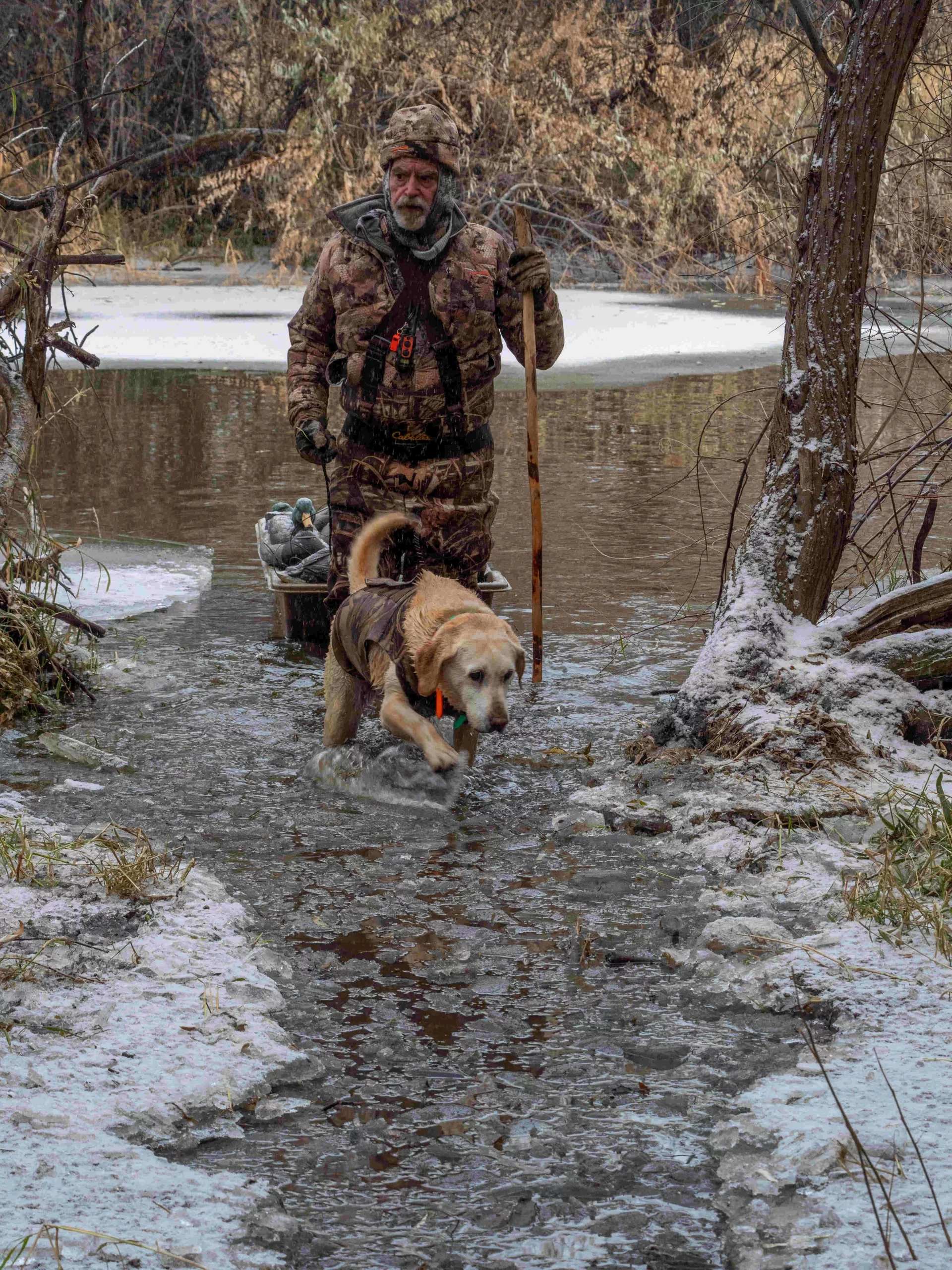
Since the converse is true as well, Lori and I are bundled head to toe in an assortment of low, medium, and high-tech clothing adequate to stock a sporting good store. Canine companionship this morning comes from Rocky, the seasoned half of our kennel’s current yellow Lab duo. The temperature means nothing to him. Muzzle framed in a halo of icy whiskers, he’s busy scanning the sky for birds. We’ve loaded our guns – the chink of brass on steel still seems to be echoing from the hills – but there’s nothing to do but wait, providing an opportunity to reflect upon years of experience with the correlation between great wing-shooting and miserable weather.
WHY WATERFOWL HUNTING IN MISERABLE WEATHER WORKS
Even as a kid, I quickly realized that bluebird days are anathema to waterfowling. I still remember a long hike through the sagebrush to a large Columbia Basin pothole one clear, still October morning. Sunrise revealed a huge raft of puddle ducks and divers in the middle of the glassy lake, none closer than 200 yards from shore. Lifeless as decoys, they stayed there all morning. The few new arrivals all bypassed our spread to join the pajama party far out in the water. Down to shirtsleeves by mid-morning, my hunting partner and I finally circled the shore shouting and waving in a futile attempt to get some ducks airborne. The only shot we fired all morning came in a pointless attempt to flush the flock. Damn, but that was a gorgeous day.
The value of rain, snow, wind, and other forms of climactic misery is old news to seasoned waterfowl hunters, but bad weather has its place in upland cover too. Hot, dry scenting conditions can render even the best flushing dogs helpless. Weather concentrates upland game as well as waterfowl in predictable ways and there’s nothing like a foot of fresh snow to slow down running pheasants and chukar. Here in Montana, I’ve long been partial to the waning weeks of pheasant season, for reasons that have nothing to do with easy limits. I’m hunting educated survivors then, and a few cagey December roosters mean more to me than game vests full of naïve birds during the opening week. The dogs can run all day without overheating and so can I. Only a few fellow madmen are foolish enough to hunt pheasants in blizzards and they’re the folks I’m happy to run into out in the field anyway. Indian summer days early on make for nice pictures, but angry winter weather often makes for better bird hunting.
CLOTHING CHOICES FOR WATERFOWL HUNTING IN BAD WEATHER
Today’s new generation of outdoor clothing has made it easier to hunt birds in nasty weather and I certainly take advantage of modern synthetics and rain gear when I’m heading out into the worst of it. But as an incurable romantic, I’m not ready to forsake all of the old ways. I like the smell of wet wool; like a good whiff of pronghorn or moose, that aroma instantly evokes countless subliminal memories, most of them pleasant (at least after the fact). No matter how comfortable a good arsenal of modern outdoor wear can make you during the thick of the fray, I sometimes think we should chuck it all and go back to cotton long-johns, plaid wool shirts, and no-camo slickers just for old time’s sake. Granted, that kind of sentiment usually goes best at the end of the day when you’re dressed in fresh, dry clothing and sitting in front of a crackling fire with a glass in your hand.
No matter how you’re dressed, nasty wing-shooting weather can eventually cross the line from inconvenience to serious discomfort. One day years ago I was hunting the Cook Inlet tide flats in mid-October with my old Lab, Skykomish. The weather was beautiful when I took off from the dirt strip beside my house, with nothing serious ahead on the weather map. That’s a dicey time of year up north though and winter can arrive in a hurry… as it did a little after nine o’clock the following morning.
I was bundled up beside the decoys shooting nothing when I saw a wall of weather start to spill over the top of the Alaska Range behind me. I would have packed up and run for cover, but all the ducks that had been riding out the Indian summer deep in the Alaska Interior arrived right along with the storm. By the time I’d shot a limit of puddle ducks and Sky had retrieved them, ice was already forming on the decoys and I had gale winds and sleet in my face all the way back to the duck shack. But that was a gorgeous day too, at least once I’d reached the comfort of the oil stove.
HOW TO STAY WARM HUNTING IN COLD WEATHER
Before we progress to the dogs and their responses to cold weather, let me offer a brief review of proper protection from the elements based on years of experience in the field of wilderness medicine. Dressing properly to prevent hypothermia involves three layers of clothing. The inner wicking layer conducts heat-robbing moisture away from the body. Polypropylene or silk long underwear serves this purpose well. The middle insulating layer creates a thermal barrier to prevent loss of body heat to the environment. While newer synthetics accomplish this adequately, it’s still hard to beat wool, or even down as long as you’re sure you can keep it dry. The outer barrier layer protects everything inside from both wind and rain. Gore-Tex is an excellent choice if you’ll be exerting enough to work up a sweat, since it allows both inner layers to breathe. If you’re sitting still in a duck blind, an impervious fabric such as oilskin or rubberized cloth may keep you even more comfortable on rainy, windy days.
HUNTING DOGS IN COLD WEATHER
A retriever’s ability to thrive in such conditions – while plunging in and out of icy water, no less — seems utterly amazing, especially to non-hunters who sometimes wonder aloud how we can make our dogs do such things. There’s an easy answer to that question. We can’t make them hunt in cold weather; they’re too busy volunteering. Thanks to centuries of selective breeding back when our dogs’ ancestors were retrieving codfish from the North Atlantic, today’s retrievers come dressed naturally in water repellant, insulating coats that no human technology can rival. The problem isn’t making them go out on frigid mornings to fetch ducks; it’s making them come back home with you once you’ve shot your limit… or given up because you can’t stand the cold anymore.
Friends from lower latitudes sometimes wonder why I don’t dress my dogs in Neoprene vests on such cold weather outings, and I appreciate their concern. I also have experienced friends who do use vests on their dogs, but I’ve always taken the position that it’s hard to improve upon nature. Left alone, a Lab’s coat will shed water, fluff out, and begin to trap insulating pockets of air moments after a single shake at the end of a water retrieve. (Note how well a retriever’s coat, with its combination of guard hairs, under fur, and body oils, mimics the function of wicking, insulating, and barrier layers of clothing as described above.) And of course my dogs are conditioned to cold by habit as well as genetics. If I were taking a retriever from Mississippi to northern Alberta to hunt ducks over water, I would argue for some supplemental insulation. The same applies if I were asking a short haired breed like a GSP to handle the duck blind chores.
The only time I’ve ever seen any of my Labs act uncomfortably cold while hunting was when they were puppies. While still a youngster, Rocky whined so hard when we threatened to leave him behind one day that we relented and took him along despite the cold temperature. He spent the morning curled up on Lori’s lap while old Sonny handled all the retrieving chores. Young dogs have a high ratio of surface area to body mass, which promotes the loss of heat to the environment. Moral: if a pup objects to being left behind when you head out the door on a bitter day, leave the dog behind anyway.
Back down at the creek, Lori, Rocky, and I are shivering and waiting for Godot. Fully adapted to the cold and clad in the best insulation nature can provide, the dog looks happy as a pig in slop. He knows why we’re here and instinctively recognizes the mission as his raison d’etre. Lori seems less certain. She makes no bones about the fact that she’d rather shoot one shoveler on a nice day than a limit of sub-zero greenheads, but she’s too proud and stubborn to show the white feather. If anyone’s going to decide we’ve had enough and start picking up the decoys, it’s going to be me.
WHY SUBZERO TEMPERATURES ARE RELATIVELY SAFE TO HUNT IN
One important technical consideration amidst all this story-telling: 20-below may be damn cold but this isn’t the kind of weather that gets hunters in real trouble. Frigid temperatures like this are almost always the result of stable high pressure systems, which means little wind or moisture. You’re much more susceptible to hypothermia on a wet, windy day with temperatures in the 30’s than on a calm, clear one like this, no matter what the thermometer says. And that’s my rationalization for hanging on a little bit longer. I know we’ll survive; I just hope my marriage does too.
The face, feet, and hands always go first on days like this. Wool ski masks have the first concern covered, although frozen condensation from my breath has turned my beard into a bib of ice. Cold fingers have long been Lori’s downfall, but she’s learned to stuff her pockets with chemical hand-warmers and I can feel their heat against my side as we huddle together on the fallen log. Insulated waders and heavy socks notwithstanding, there isn’t much to do when your toes start to go numb except stamp your feet and hope the birds arrive before common sense prevails.
We’ve just reached that stage when Rocky glances sharply back over my shoulder. He’s too well trained to break, but the rules don’t say anything about excited whining. The noise of setting wings sounds like a jet engine spooling up for takeoff. Then the birds are circling the blocks and it’s time to start mentally isolating drakes from hens.
By pass-shooting standards, there isn’t much to the gunning here in the late season, when most birds fall at ranges I could reach comfortably with my fly rod. But the show is all mallards, and the goal is to kill five birds with green heads while leaving the ladies untouched. The epic part of the morning will belong to the dog soon enough.
“Take ‘em!” I whisper on the next pass and seconds later three drakes are tumbling as the rest of the flock claws its way back into the sky. Two of the fallen birds leave neat little entrance wounds in the snow bank across the creek while the third tumbles away on the dancing current. After handing my empty gun to Lori, I line Rocky up on the troublesome retrieve and he’s off in a spectacular geyser of spray.
Suddenly the cold just doesn’t feel cold anymore, and it’s another gorgeous day after all.
In 1991, the federal government banned lead shot for waterfowl hunting. Initially the ban motivated a transition from lead to steel shot, and steel remained the only option for waterfowl hunters for many years. Though steel shot is certainly less harmful to the environment than lead, its effectiveness is far from perfect. While steel is harder than lead, it is also less dense (around 8 grams per cubic centimeter versus lead’s 11 g/cc), which means less kinetic energy downrange. Simply put, hunters who had grown up shooting lead quickly noticed that steel didn’t kill as effectively, and they complained of wounding and losing more birds than in the days of lead. The inadequacy of steel shot led hobbyist loaders to experiment with materials like bismuth, nickel, iron alloy, and eventually tungsten.
Materials like bismuth and nickel were slight improvements over steel, but it was tungsten that changed the game when it comes to how we think about shotgun ballistics. Having a density of 19.3 g/cc (nearly 70 percent denser than lead), tungsten is a great option for hunting ammunition. However, tungsten was a thorn in the side of metallurgists for hundreds of years after its discovery. With a tensile strength of 1,510 megapascals, tungsten is the strongest naturally occurring metal on Earth. This strength, along with its brittleness and an extremely high melting point (over 6,000 degrees Fahrenheit), makes tungsten very difficult to work with. Ammo manufacturers experimented with different alloys until they came across what we now refer to as Tungsten Super Shot (TSS), a composition of 95 percent tungsten and 5 percent nickel and iron powder. TSS isn’t just an alternative to other nontoxic shot materials, it’s a vast improvement over anything that’s ever existed.
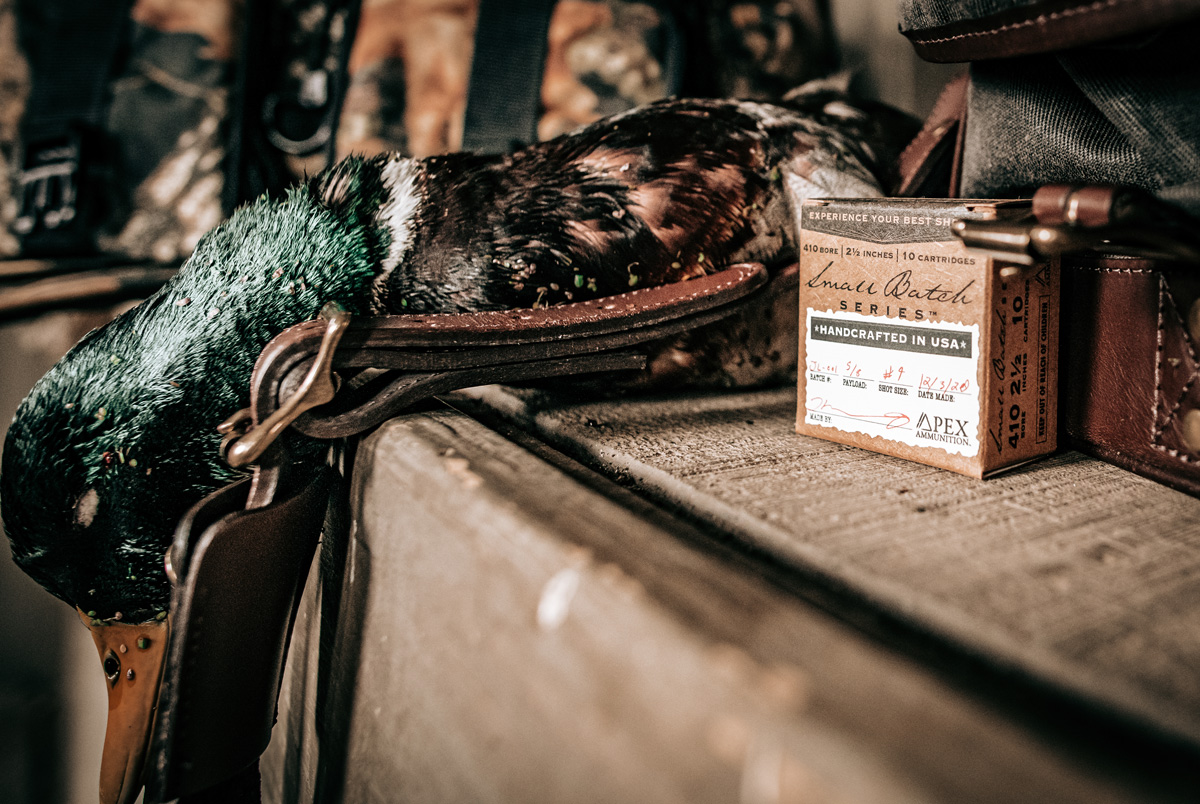
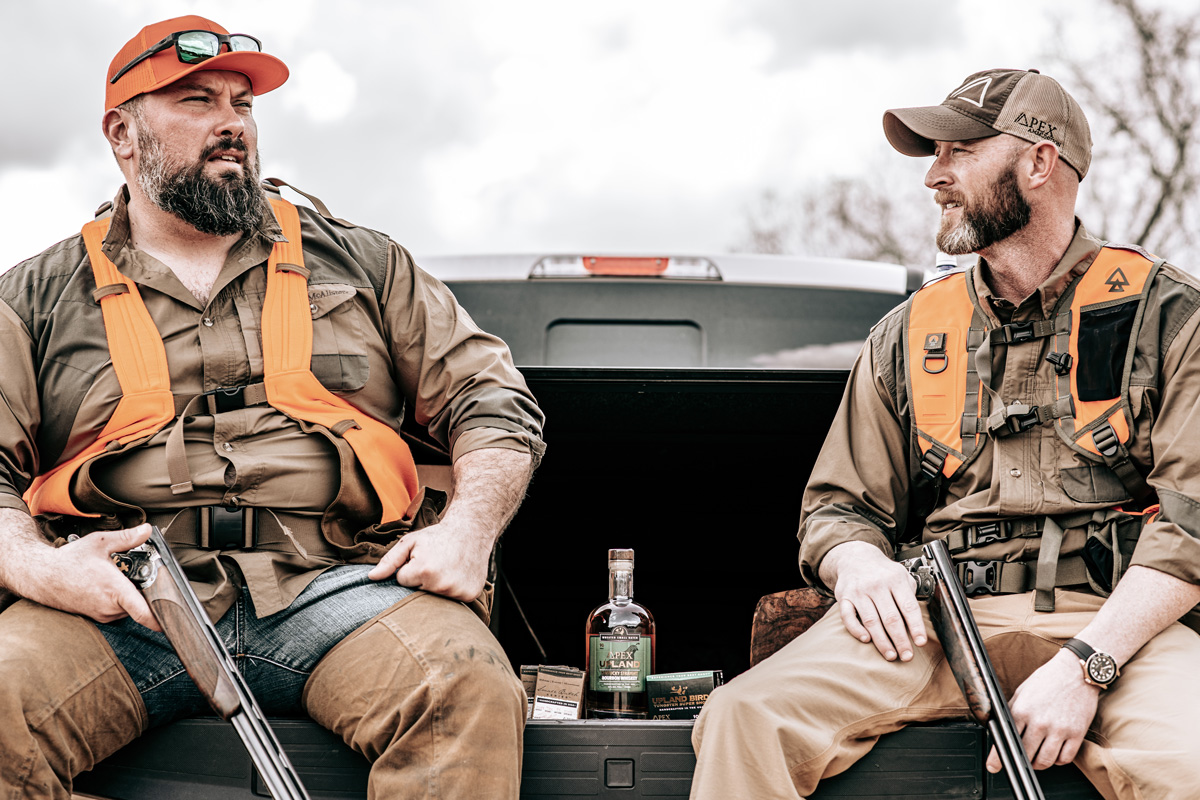
One company that has been leading the tungsten revolution is Mississippi-based Apex Ammunition. Founded, owned, and operated by three friends and military veterans, Nick Charney, Jared Lewis, and Jason Lonsberry, Apex hand-loads a variety of TSS shells for everything from turkeys to waterfowl to predator hunting.
“There are a ton of advantages to TSS,” says Lewis. “First, being 60 percent denser than lead and over twice the density of steel (18.5 g/cc), hunters can get more kinetic energy out of a smaller shot size. Second, with the drop in shot size more pellets can fit into a single shell.”
For example, a single No. 9 pellet of TSS has a similar mass to a No. 5 lead pellet—and because No. 9 pellets are much smaller, you can stuff a lot more pellets into a shotgun shell. Imagine a traditional 2 ¾-inch shell of No. 5 lead pellets with over twice as many pellets inside, and you start to understand the extreme effectiveness of TSS. Still, the advantages go on.
The higher density of TSS means it can deliver killing blows at longer distances. Moreover, smaller pellet sizes mean better penetration and more lethal shots. Smaller pellets are also less affected by wind because of their smaller surface area—which leads to greater accuracy, especially at longer distances. Perhaps more important, smaller, denser pellets slow less quickly, and thus maintain speed and energy for a longer distance. “[TSS] doesn’t hit and smush like lead,” says Lewis. “It hits and drives through the target. It’s like the difference between throwing a ping pong ball and a marble.”
Then there is what might be the greatest advantage of TSS: the opportunity to drop the payload weight, enjoy the corresponding drop in recoil, and still retain the ability to drop birds at long distances. A hunter can now carry a sub-gauge shotgun and enjoy the effectiveness of a larger load without the punishing recoil.
“What I love about our shells, and specifically our .410 shells,” says Lonsberry, “is that my sons can shoot them and be as effective at 40 and 50 yards as a guy with a 12-gauge shooting steel.”
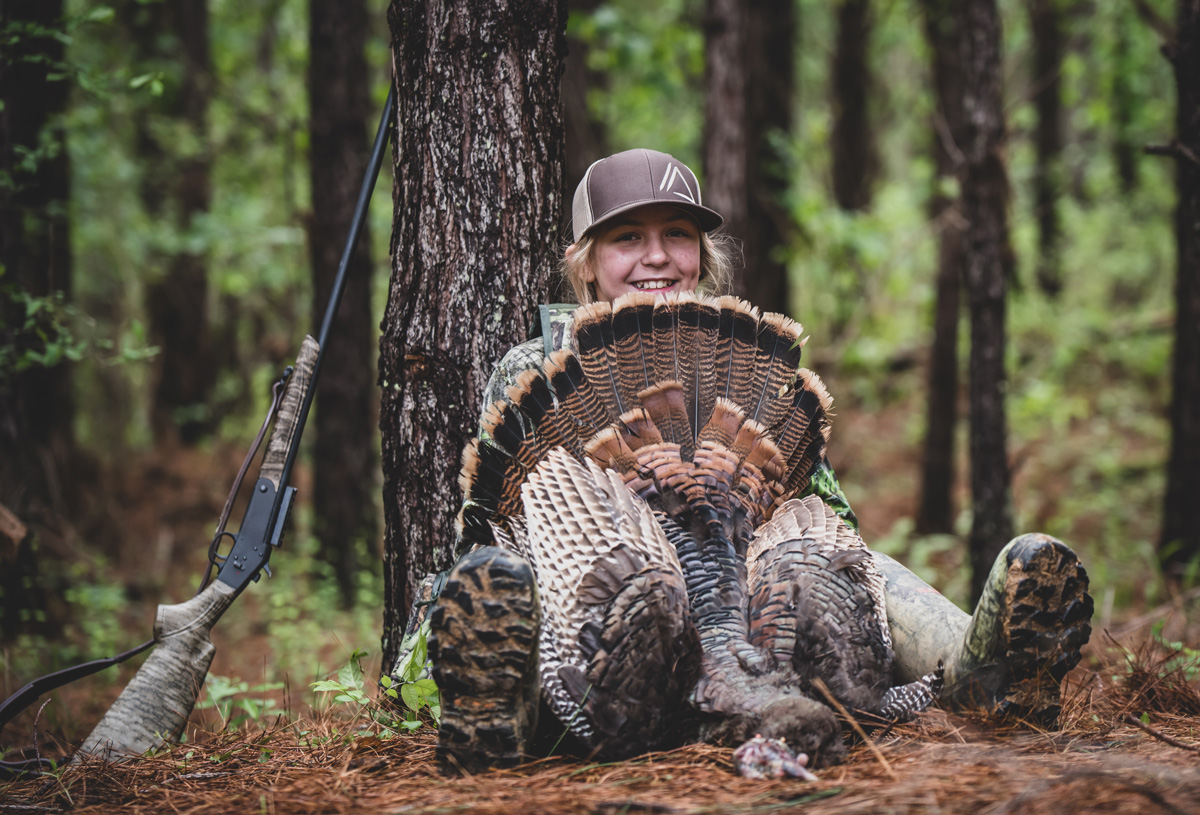
“The number of kids who have shot their first bird with our .410 loads is incredible,” adds Charney. “It’s great to introduce someone to hunting because of the lower recoil, and it has also allowed children, the elderly, and people with disabilities to drop to sub-gauges and have that hunting experience, but still do it responsibly.”
Realizing the effectiveness of TSS, many states are changing their regulations to allow turkey hunting with smaller bore shotguns like a .410 as well as allowing smaller shot sizes to be used. TSS also means you can get away with carrying a lighter gun like a 28-gauge for pheasants and still be effective at traditional 12-gauge ranges.
Because of its high cost, TSS has traditionally been associated with turkey hunting, in which outside of patterning a shotgun, a hunter might only need a few shots per season. Apex, however, is quickly expanding TSS outside of turkey hunting. In many states, the limit for upland birds like grouse and pheasants is two per day—hardly high-volume shooting. “Hunting pheasants with TSS makes perfect sense,” says Lewis. “If you are putting on some miles, you want to make the shots you get count.” Moreover, many states are making nontoxic shot mandatory on public lands. Choosing to shoot TSS means you don’t have to worry about matching your shot material to where you are hunting.
Apex also has a line of shells designed for waterfowl hunting that blends TSS with their plated S3 steel shot. These shells give you the benefit of TSS but are more affordable for days when you need more than just a handful of shells. TSS especially shines for waterfowl hunting because of its consistent patterning. Unlike lead, which is quite soft, TSS shot doesn’t deform when it collides with other pellets in the shot column. This deformation is what causes fliers, holes in patterns, and fewer pellets on target. In ballistics tests TSS consistently offers full and predictable patterns out to 60 and even 70 yards.
“As long as you have patterned your gun with the choke you intend to hunt with and know the load you are shooting,” says Lewis, “the days of shooting 3 ½-inch BB steel loads for ducks and geese are over.”
Of course, how much you are willing to spend on shotgun shells depends on your budget and how much shooting you do. Not many people are going to be shooting TSS at the sporting clays course or the dove field. Still, when you take all the costs of a hunt into consideration, ammo is probably one of the cheapest components.
“You might spend more per shell, but you aren’t shooting as many shells,” says Charney. “You are killing birds on impact instead of having to take follow-up shots.”
Apex also offers shells through their custom shop, so you can have a TSS load made to your exact specifications. Even better, every shell is handmade and goes through a level of quality control not found elsewhere.
“It’s a hands-on process with everything we do,” says Lewis. “By the time a shell gets boxed, it has been touched seven times. We want everything to be consistent. Every Apex shell is plus or minus one pellet because we measure based on weight, not volume. Every box is hand-signed and dated by the builder to ensure quality. It’s hard to understand how well it works until you see it for yourself.”
TSS is undeniably better than lead in its effectiveness, but it is also better for the places where we hunt and fish. As hunters and anglers, we care about clean water and healthy ecosystems. Switching to nontoxic TSS is a no-brainer. When you combine the level of detail Apex brings to shotgun shells with the undeniable effectiveness of TSS, you have the greatest advance in shotshell performance in recent history.
The Outdoor Retailer show is a gearhead’s dream: new products from all of the major players can be handled, discussed, and mused about, while future trends in the outdoor industry can be sussed out through upcoming releases. This year’s Snow Show didn’t disappoint, with major releases from brands across the board. The most visible trend seemed to be sustainable construction and manufacturing processes, building upon the direction that many brands have taken over the past handful of years. Whereas Patagonia has maintained a firm commitment to environmentally-friendly practices, other labels have thankfully taken a page from their playbook and moved towards product lines that reduce the overall impact of purchasing new consumables. Other brands are bringing heritage styles and designs back to the forefront as an ode to the time when product longevity was the primary goal.
Highlights
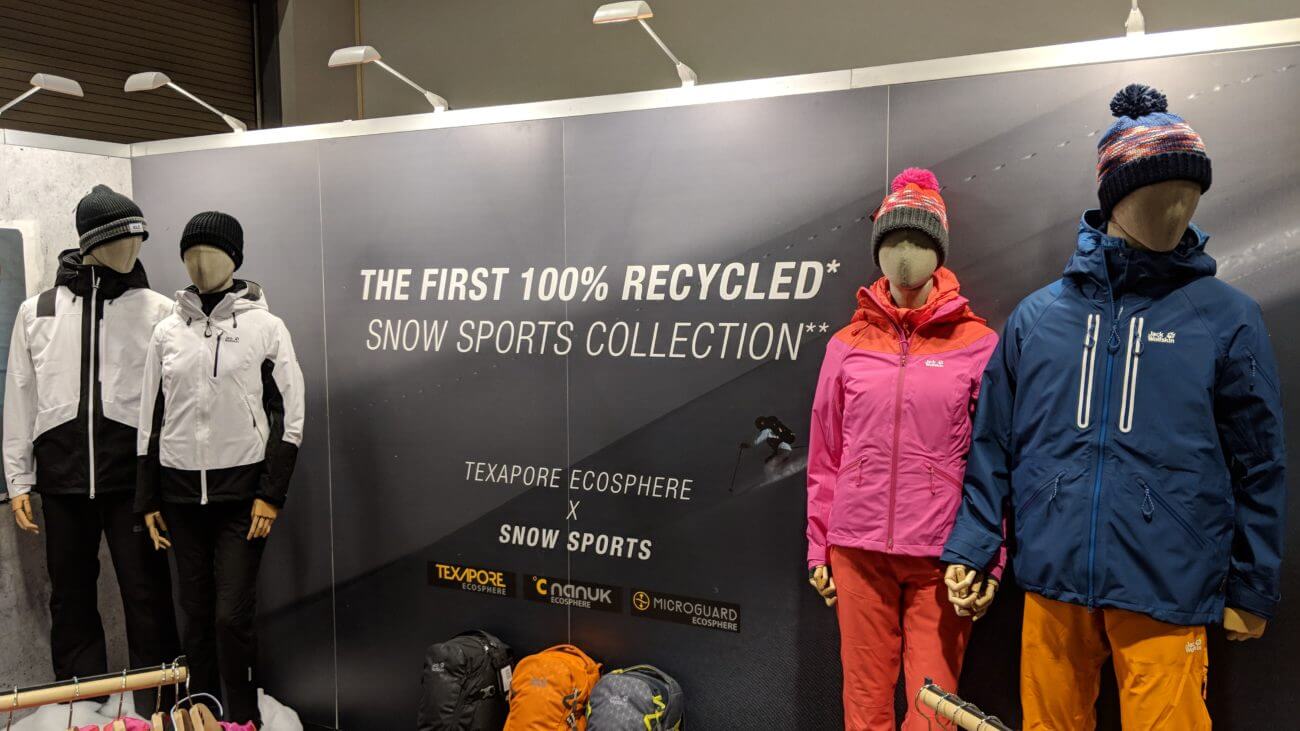
Jack Wolfskin introduced the world’s first 100% recycled snowsports outerwear collection and a new synthetic insulation system that provides the loft of goose down even in wet conditions, furthering their commitment to ethically-produced outdoor gear.
Igloo has followed suit with the world’s first 100% compostable cooler, aiming to replace the styrofoam options that litter shorelines everywhere. They keep ice as well or better than styrofoam, can be dried and reused, and are compostable when they wear out.
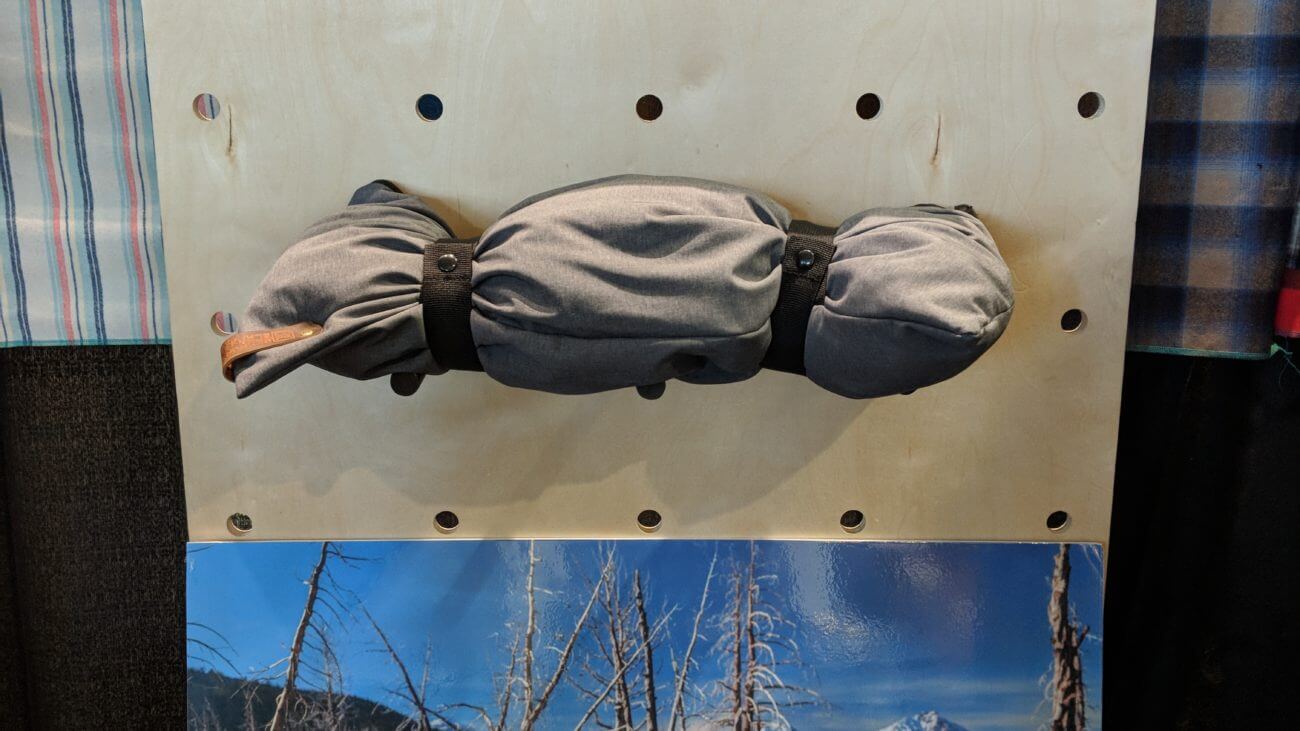
Belmont Blanket is bringing back classic blanket and bedding options with one important upgrade: they’re waterproof. Perfect for camping under the stars or catching a show at your favorite outdoor amphitheater, products include thoughtful design elements including leather straps sourced from Danner Boots and wool linings from Pendleton Woolen Mills.
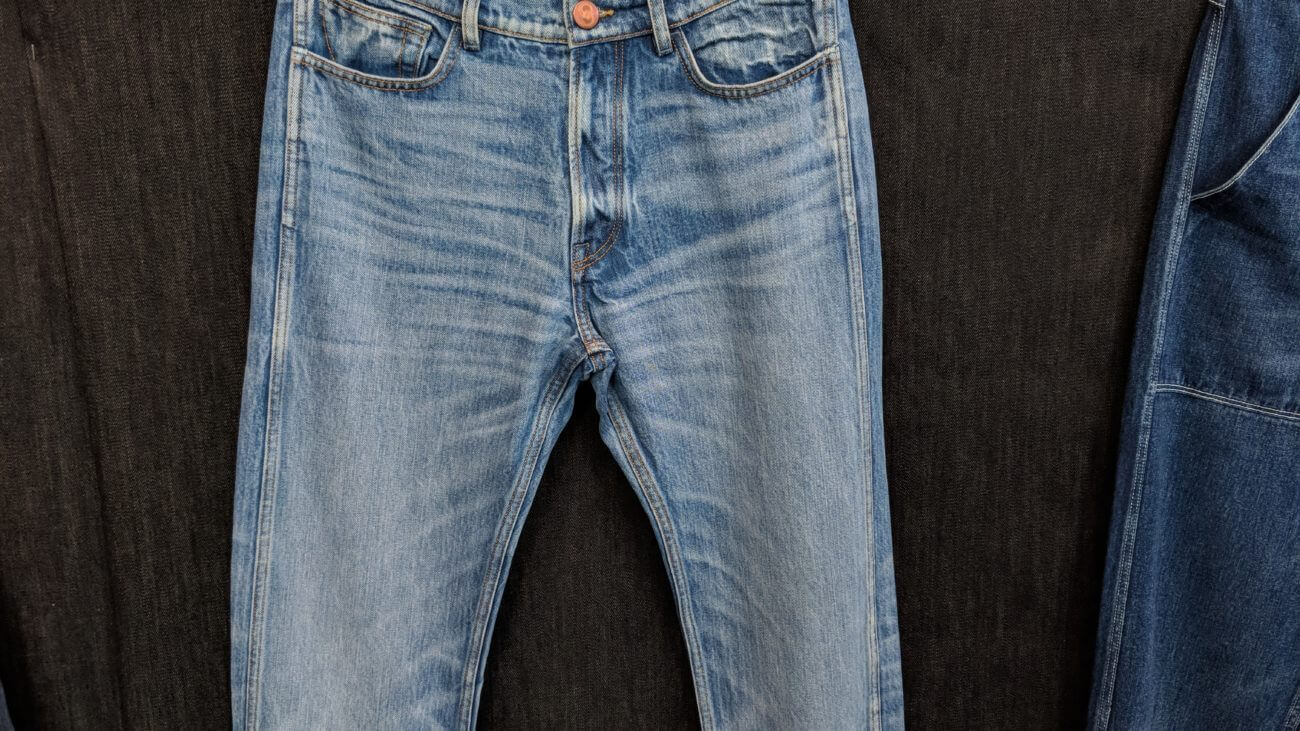
Sweden’s reDEW8 has reinvented the denim jean by moving away from cotton entirely. Their “Zero Cotton” styles utilize a 100% wood fiber textile that, per company reps, reduces water consumption by about 7,000 gallons per pair relative to traditional cotton construction. Fits are varied and well-considered, offering a jean option for most body types.
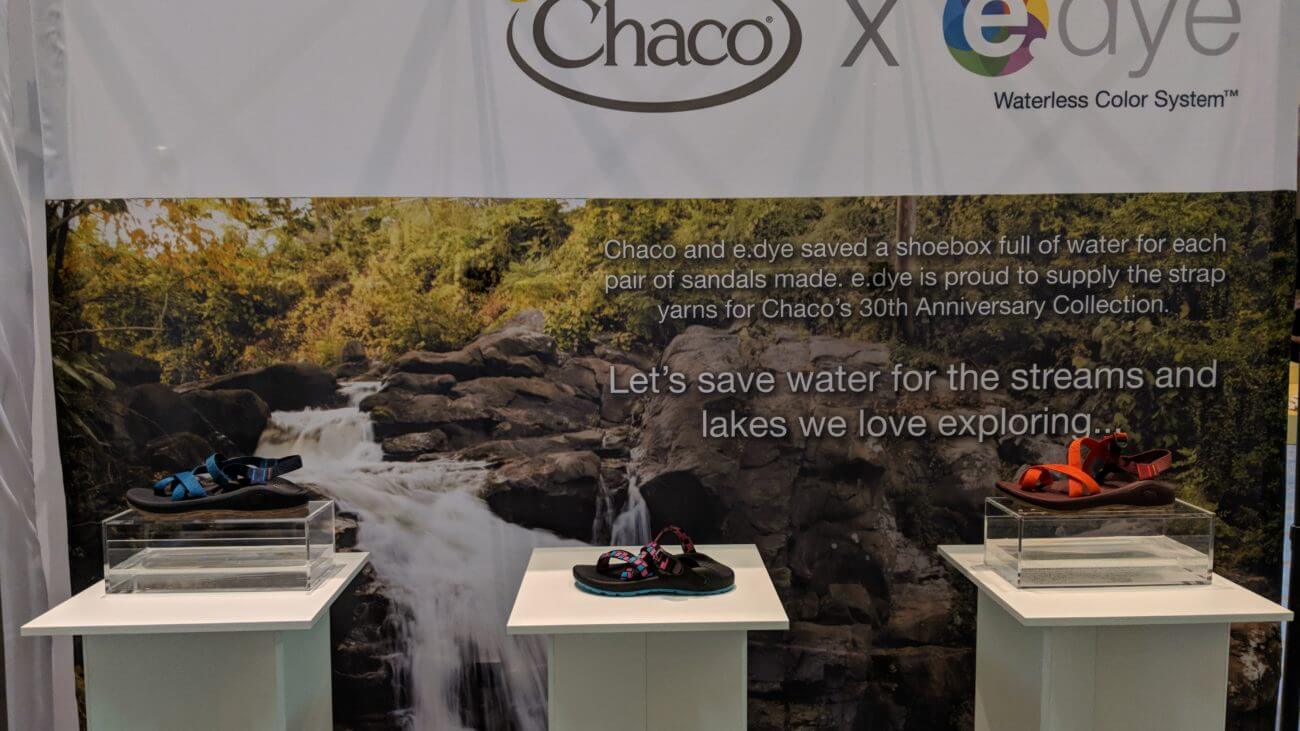
Chaco, known by river rats and outdoor ramblers for their high-quality sandals, has joined up with e.dye to reduce water consumption. e.dye’s Waterless Color System requires 75% less water than traditional dying practices and allows a shoebox-sized volume of water to be saved for each pair of sandals dyed with this technology.
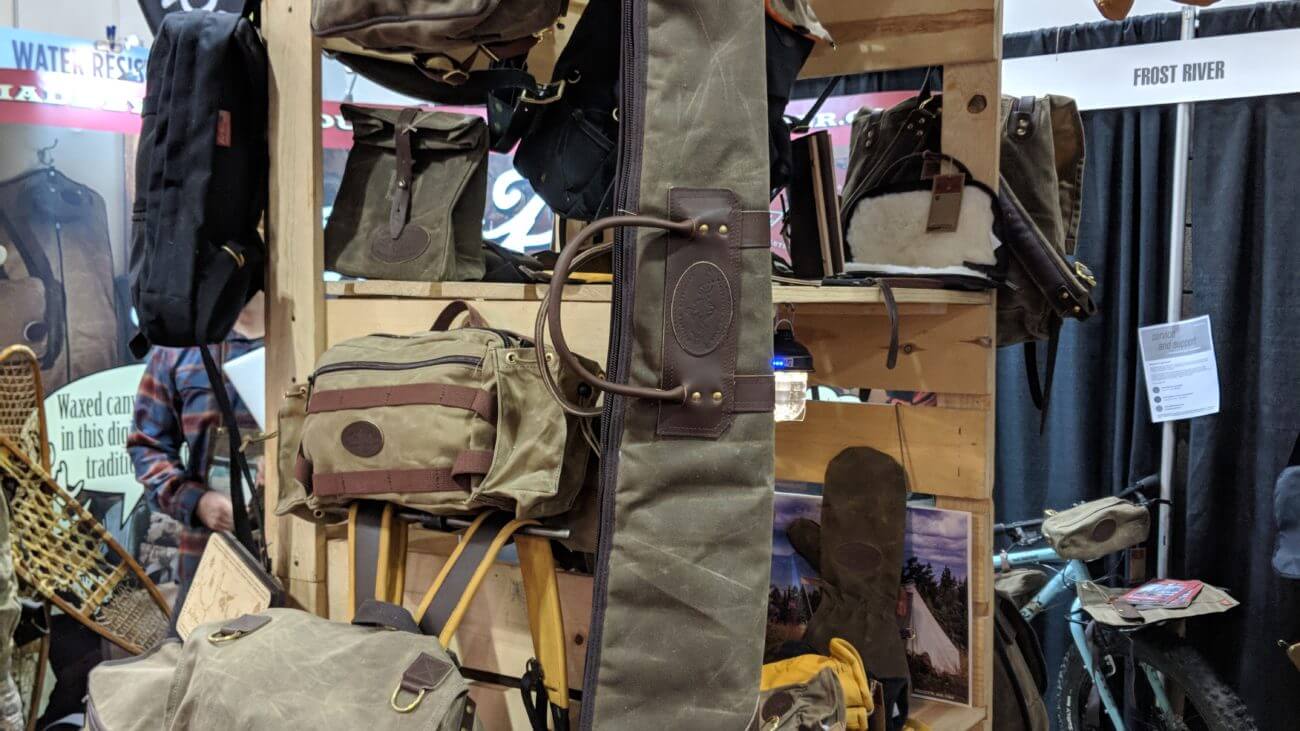
Frost River is creating long-lasting outdoor products with classic lines, perfect for hunters, anglers, and urban folks who appreciate heritage aesthetics and construction. Their backpacks, bags, gloves, and rifle cases look, feel, and operate beautifully with rugged canvas and leather designs. Fans of long-lasting, hand-me-down-quality products will love what Frost River has brought to market.
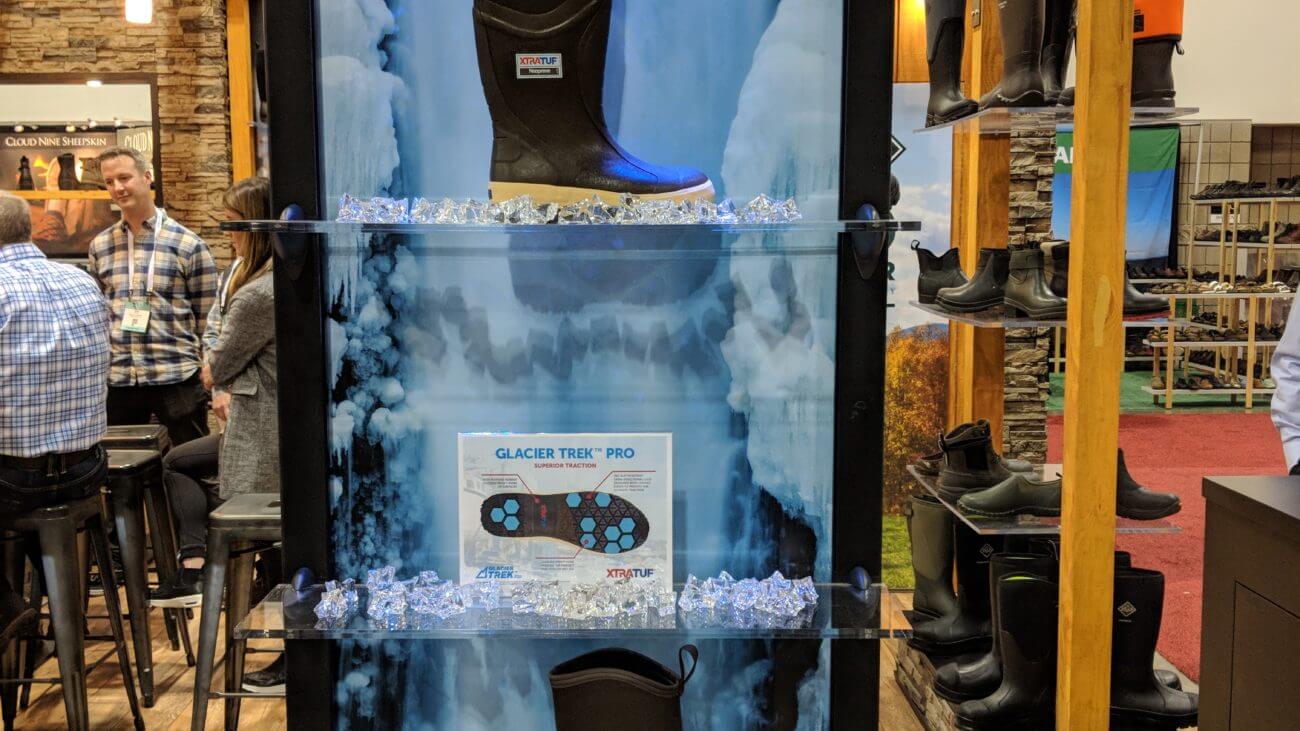
Xtratuf is known by commercial fishermen and brewers as the gold standard in rubber boot manufacturing. For the Fall/Winter 2019 season, Xtratuf is introducing the Swingsaw – a neoprene and rubber over-the-calf boot with an updated sole for traction on ice and cold, slippery surfaces. The micro-traction sole pods have a noticeable grit that reduce slippage in wet, icy environments.
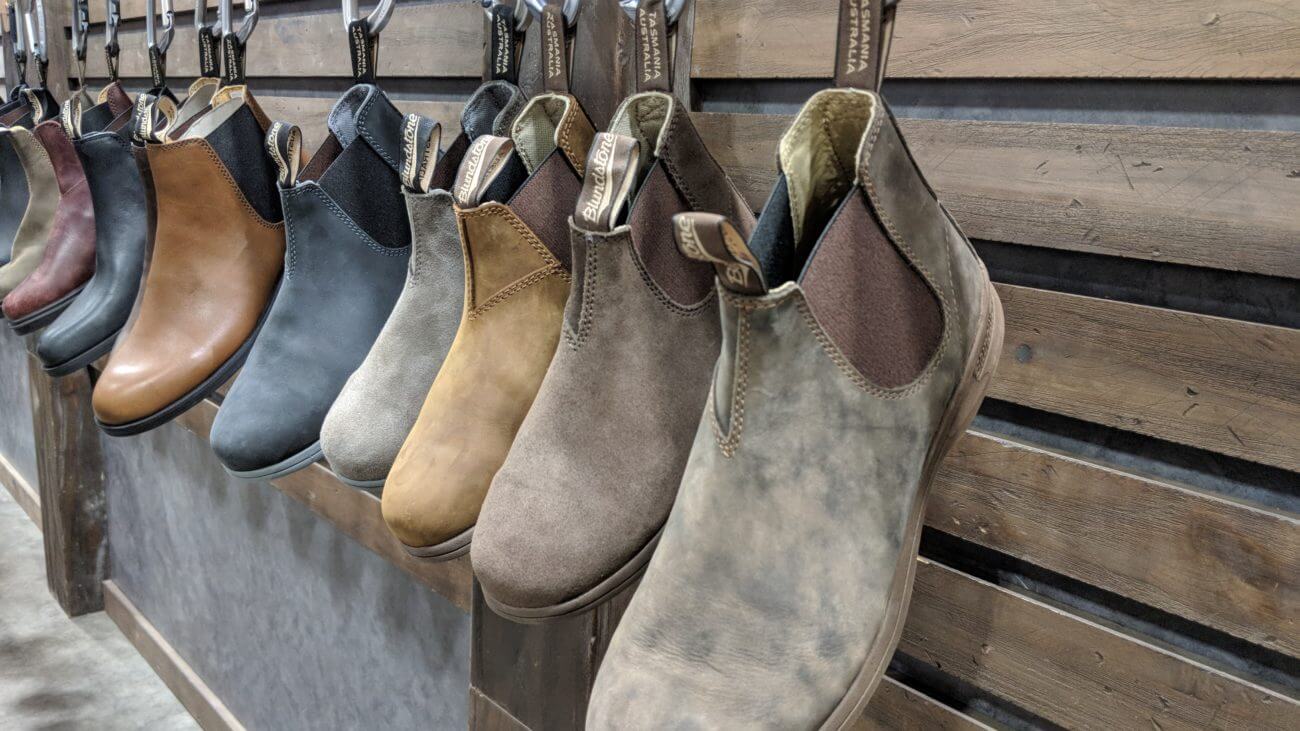
Blundstone boots have been found on adventurers’ and workers’ feet since 1870, with their “chelsea” styles seeing a major resurgence in urban markets over the past few years. The Tasmanian brand has trimmed up their classic style with a travel-friendly boot featuring a lightweight outsole, slightly shorter height, and thinner leather upper that is perfect for warm-weather wear.
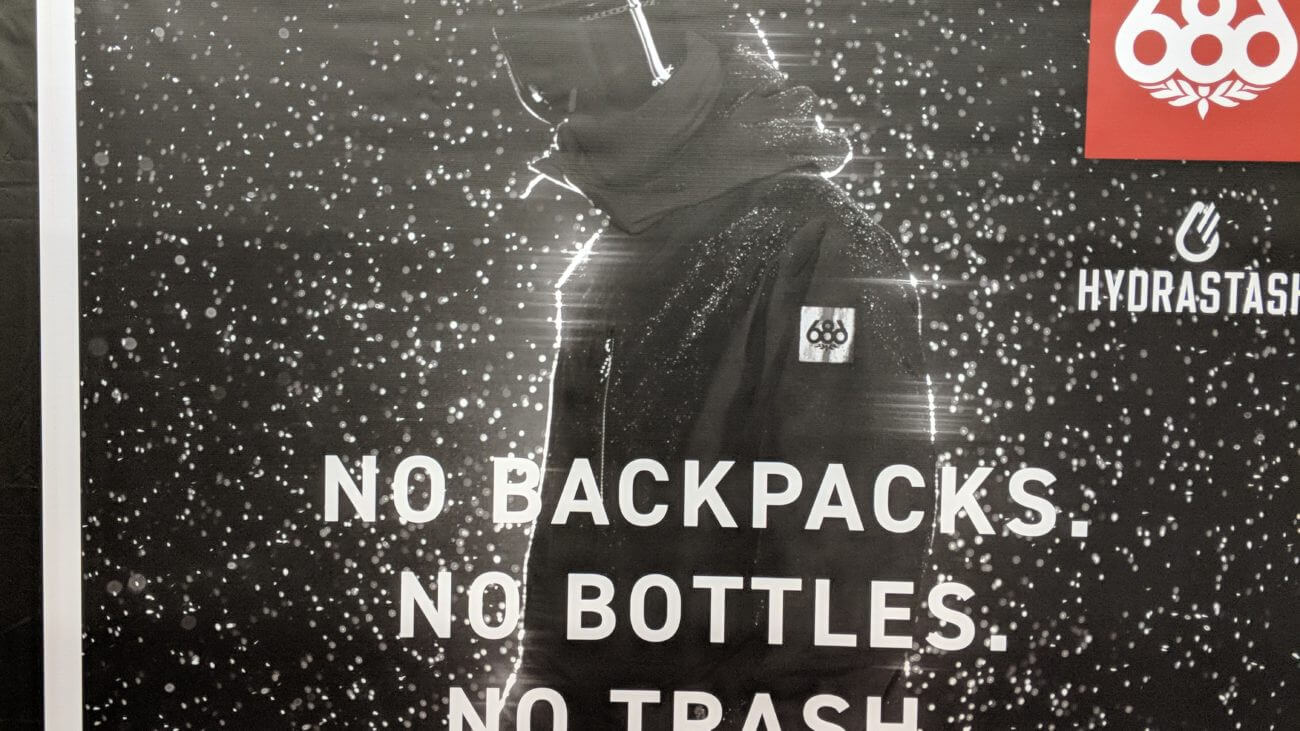
In the snowboarding world, 686 is a stalwart of quality, stylish outerwear worn by some of the biggest names in the sport. Their new Hydrastash system is the world’s first built-in apparel hydration system, allowing wearers to unobtrusively carry their water inside their jacket without the need for an external bladder or water bottle.
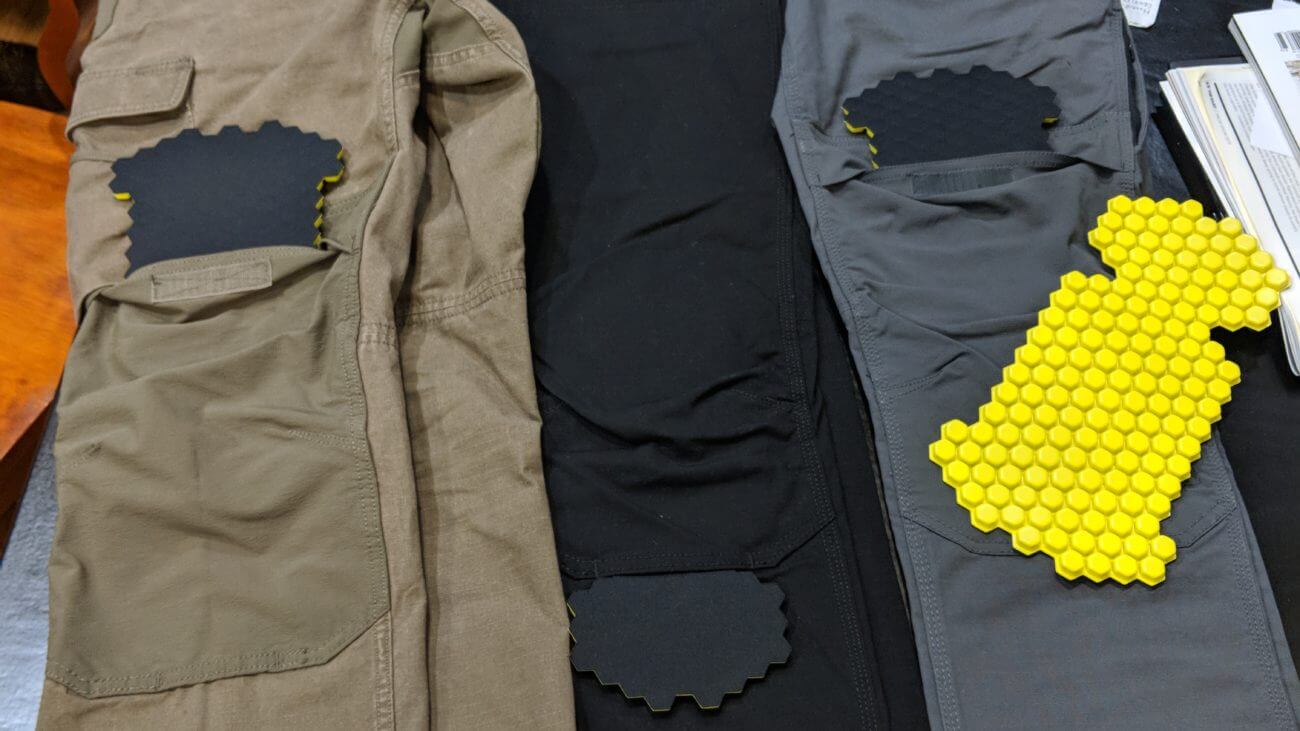
Carhartt is a brand appreciated by a wide variety of adventurers and skilled laborers around the world. Often overlooked, knee comfort is a major consideration for folks who spend a lot of time crouching – brewers, mechanics, electricians, carpenters, and anybody else who likes to get their hands dirty. New for this year, Carhartt has introduced a washable, removable knee pad system that fits in any of their double-knee styles. It’s something you didn’t realize you needed…until you did.
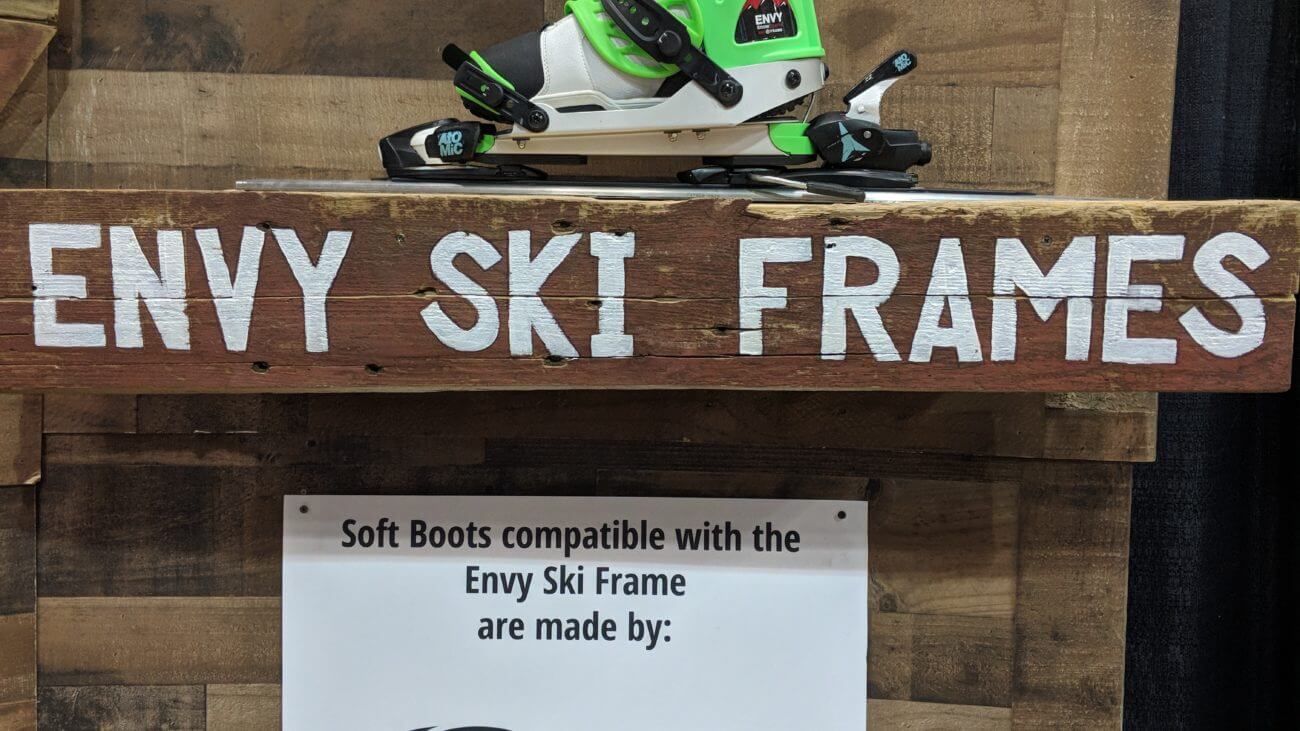
For many skiers, boot comfort is a huge issue that reduces their ability to ride all day without significant discomfort. Envy Ski Frames allow skiers to ride in snowboard boots withou major loss in performance. The binding system easily mounts to all alpine skis and provides the support necessary to ride with softer, more comfortable snowboard boots. They’re a game-changer, to say the least.
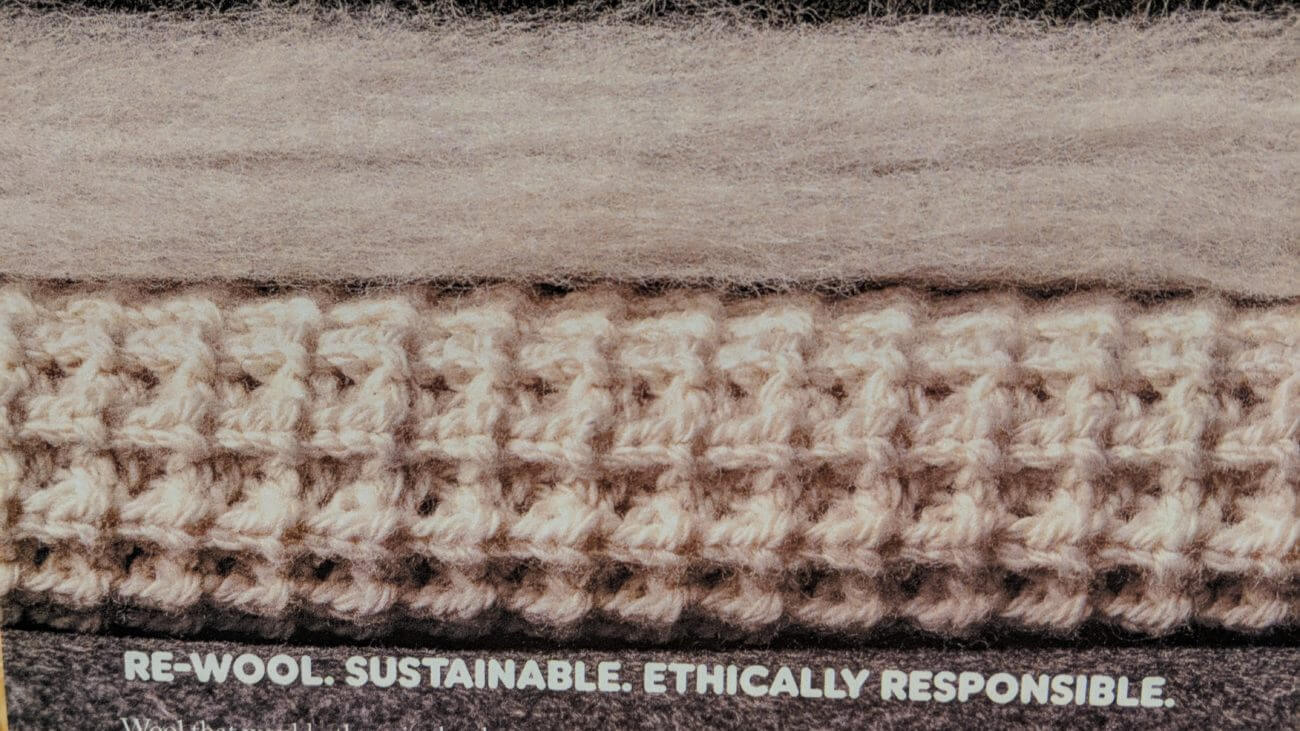
Fjallraven has always been forward-thinking in designing stylish, quality backpacks, outerwear, and layering systems. Their Re-Wool styles utilize leftover wool fibers from textile factories blended with new fibers to create a more sustainable, ethically responsible option to 100% virgin wool construction.
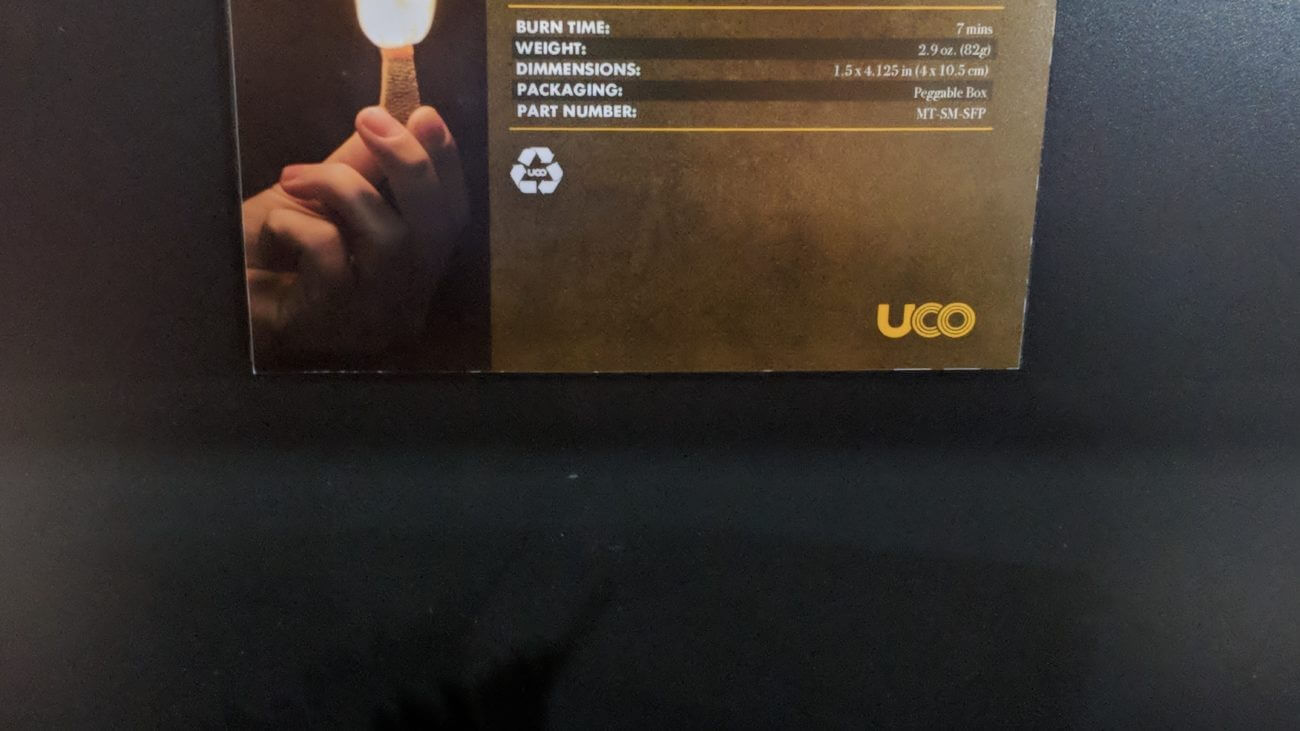
A fire can, quite literally, be a life saver. Uco Gear creates a variety of outdoor products that help save the day, including weatherproof matches and firestarters. If you’ve ever been stuck in the backcountry in the wind and cold, you know how valuable a reliable fire starting system can be.
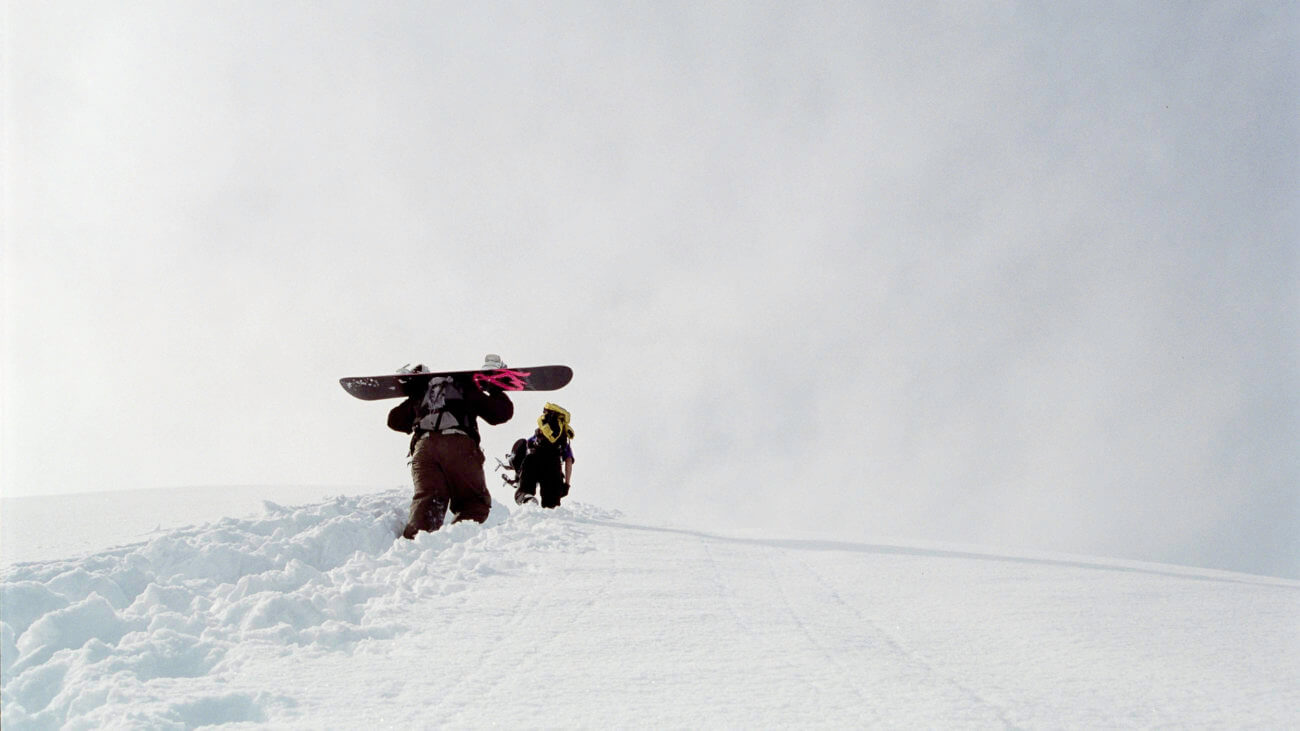
I started skiing at age three and switched to snowboarding by the time I had turned thirteen. My brothers excelled in different skiing disciplines – one on telemarks, one on alpine skis – so it fit for me to start snowboarding. Growing up in the mountains, the three of us would climb up local hillsides and huck ourselves into the abyss, not thinking too much about it. It’s just what we did. It’s how I grew up.
In spite of this, I would say I’ve always had a hesitation for mountain adventures. I’m comfortable among the mountains but the desire to seek more danger and exposure has never really been my cup of tea. But growing up, myself, my brothers and my friends were always doing just that. I believed for a long time that if you do something daring, you’ll be rewarded.
I suppose the camera is where this story all begins. When someone pulls out the camera, people generally go bigger, try harder, and increase the risk. That’s exactly what happened the day I got caught in an avalanche.
It was a calm, overcast day with twenty inches of fresh snow. We had decided to ride the “safer” backcountry zone at Mt. Baker, Colorado. The snow was heavy and wet and the avy report indicated considerable risk. Dropping in, I thought about the camera. My brother Zack was filming from the other side of the mountain. I was imagining the final footage, danger be damned. Normally on this run, I would have pulled out for a rest in the safe zone but I continued for the camera. I entered the next slope with too much speed and put on the brakes.
I was blindsided immediately by a ferocious wave of churning snow. It took me head over heels down the mountainside, leaving me buried upside down. I couldn’t move. The air around my face was becoming warm and I was getting sleepy from the lack of oxygen. Thankfully, my board was sticking out of the snow slightly and my brothers and friends were able to find me. They got me out in three minutes, undoubtedly saving my life.
I was one of the lucky ones, but the whole incident shook me. I tore my ACL in the Fall, giving me some time to think about everything – the skiing industry, my role in it, the impact of performing for the camera. I decided to take a step back from it all – skiing and filming. I didn’t want to contribute to something dangerous – I wanted to remove myself from the equation. The reason is simple: I feel crazy, weak and unhappy when I’m filming with people I love while they risk their lives. The only power I have is to say, “I won’t film it.”
It wasn’t long after I’d quit the whole thing though that I began receiving offers to produce ski films professionally. My brother was also seeing more success as a professional skier, affording more opportunities to film him. Over the next few years I struggled with this internal battle – I wanted to be part of the crew but I was also terrified of what could go wrong.
Eventually, I decided to join Zack on a film adventure to Alaska. I realised that I wasn’t really achieving anything by just sitting back and refusing to be a part of it – those I would film would be placing themselves in danger whether or not I was shooting. From this realisation, “Kodak Courage” was born.
A production company approached me about producing creative content about “the power of film” and we decided that focusing on the camera’s effect on skiing and snowboarding would be a good way to showcase this concept. I wanted to spark conversations about the impact of the camera on athletes’ judgement and invite the question of whether or not it is really worth the risk to get the shot.
Since my return to the mountain, I think I’ve learned how to balance the risk with the reward more effectively. There are alot of things I do now to mitigate some of the risk, but I think the biggest change has been from knowing when to – and having the confidence to – step back and say, “No – this isn’t a good idea”. It ensures that I don’t contribute to or encourage other people to take those risks either, thereby giving me a peace of mind that I didn’t have before.
Would I go back and change that avalanche experience if I could? I wouldn’t be in the place I am today if I did. What I experienced left me with an ultimately positive and more sensible outlook on life, and for that I am extremely grateful.
CRANBROOK, B.C., Canada – Seriously North, a film by InTents Media of Parowan, Utah, was named winner of the 2018 International Fly Fishing Film Festival, announced Chris Bird, Executive Producer, Bird Marketing Group.
Seriously North received the winning nod from votes taken at the conclusion at each of 102 Fly Fishing Festival presentations during 2018, said Bird.
The 14-minute, 35-second fly-fishing adventure captures the hardships, divine intervention and treasures encountered finding the largest Arctic char in the world on a trip to the “seriously northern” Canadian Arctic Circle.
The film was shot in and around Nunavut, Canada, among herds of musk ox, flocks of ptarmigan, Arctic fox, bears and caribou.
Seriously North was produced, filmed and edited by the InTents owner’s group of Phil Tuttle, Derek Olthuis and Courtney Boice. During production and post-production, principal photography was by Tuttle and Boice, editing by Tuttle and still photography by Olthuis.
The three are self-taught cinematographers and film editors. Tuttle obtained a BA in biology/zoology from Southern Utah University; Olthuis studied writing at Utah Valley University; and Boice has a BA in recreational management from Brigham Young University Idaho.
Seriously North is InTents’ third winning International Fly Fishing Film Festival submission following Arctic Unicorns, 2016 IF4 Film of the Year and The Hidden, film of the year winner in 2017.